Camoufleurs
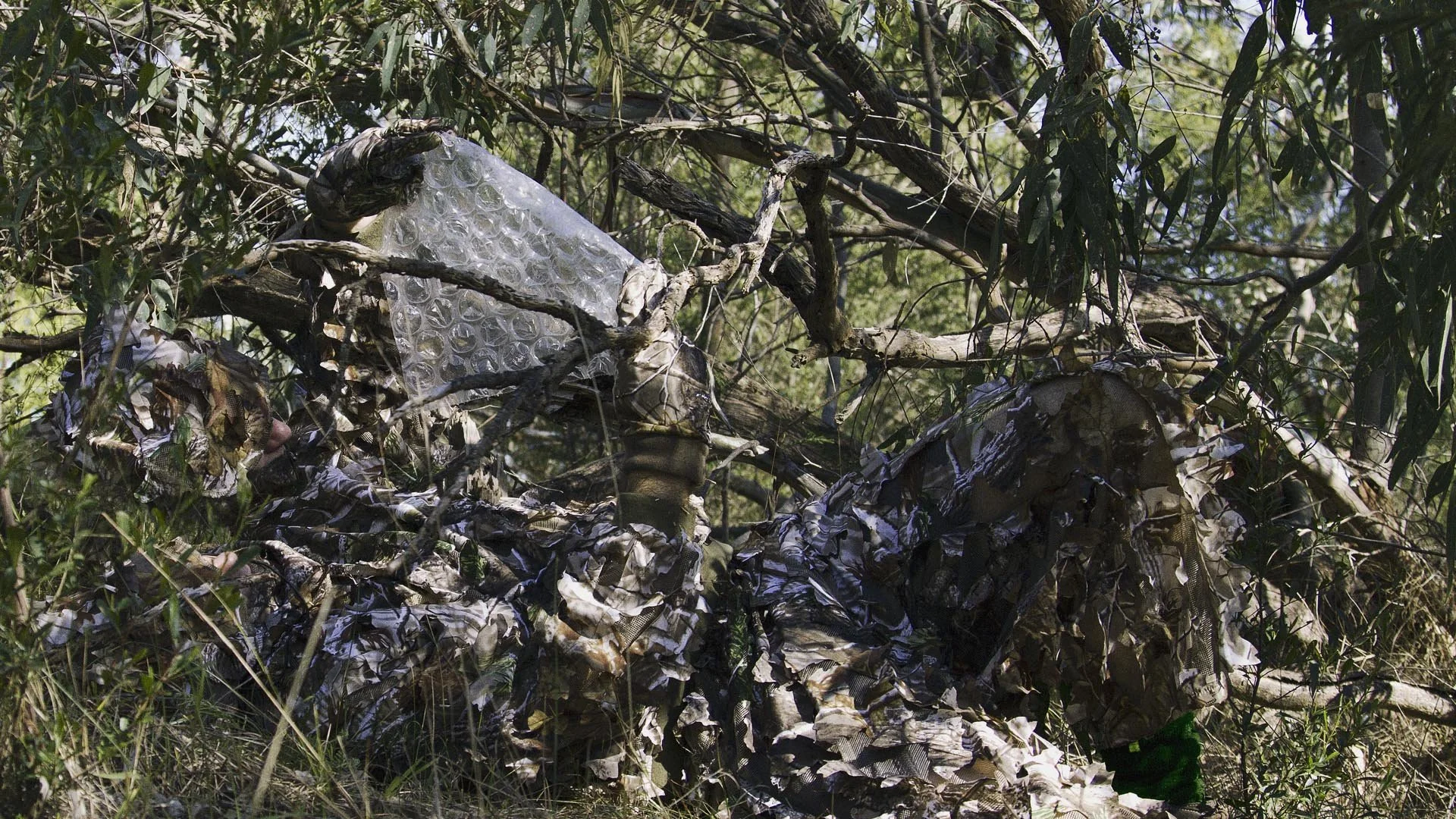
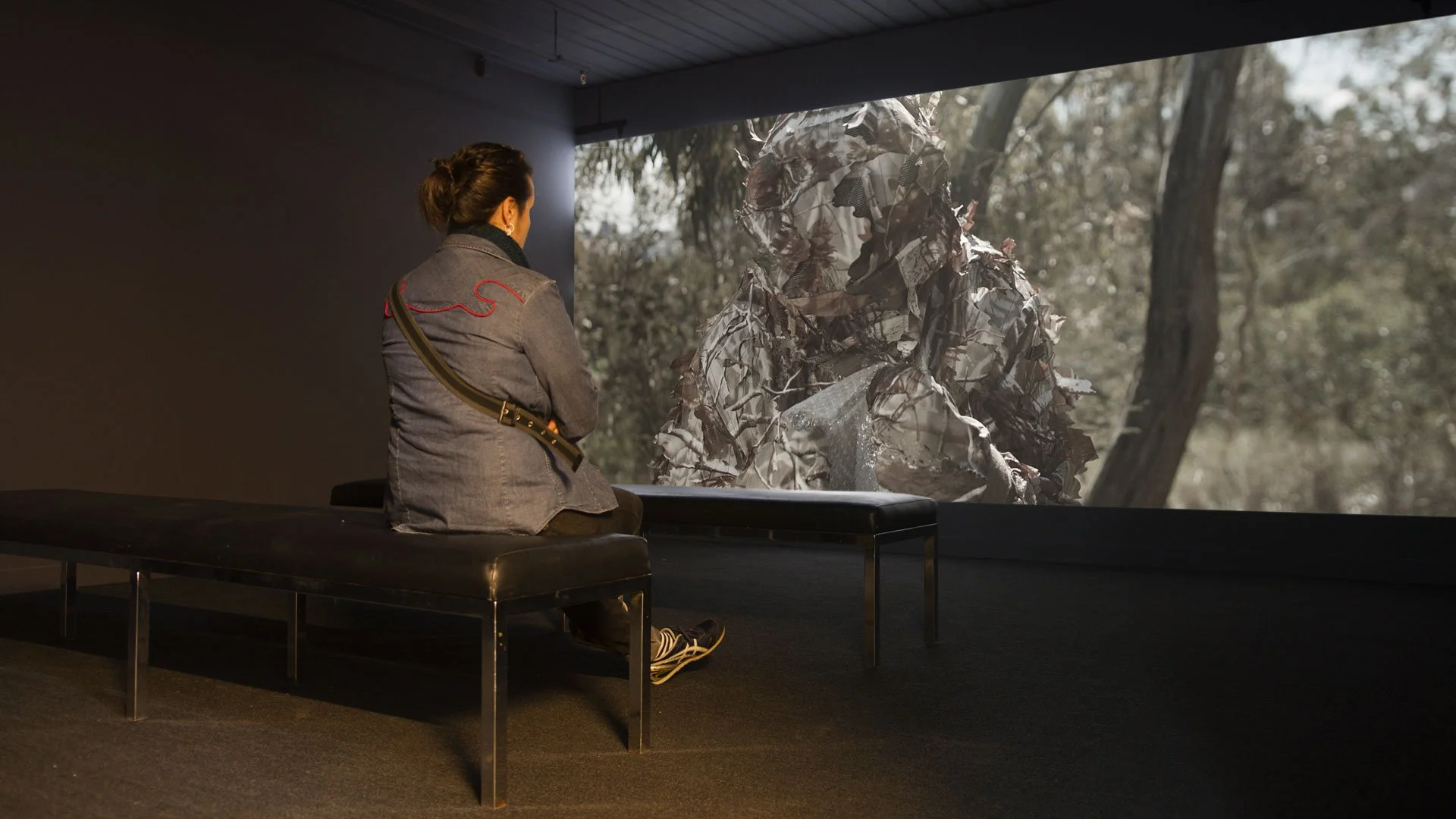
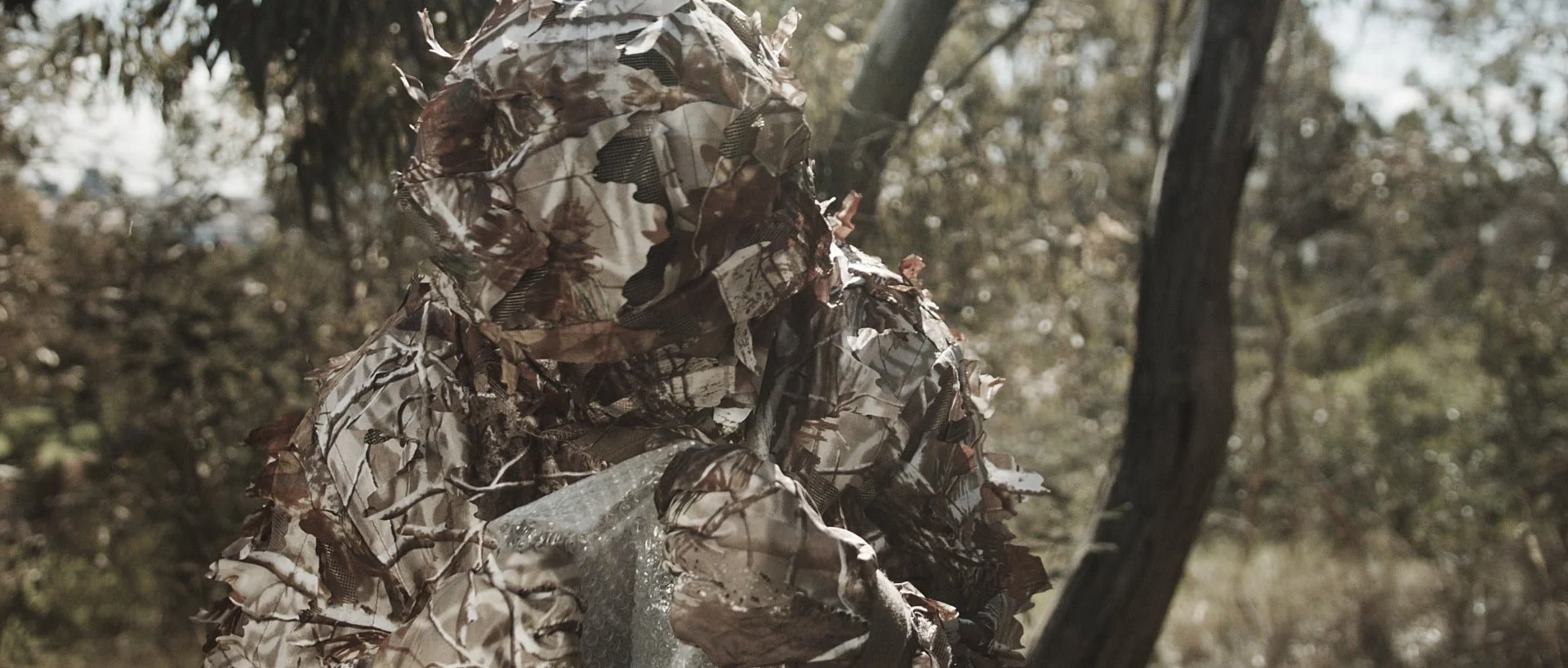
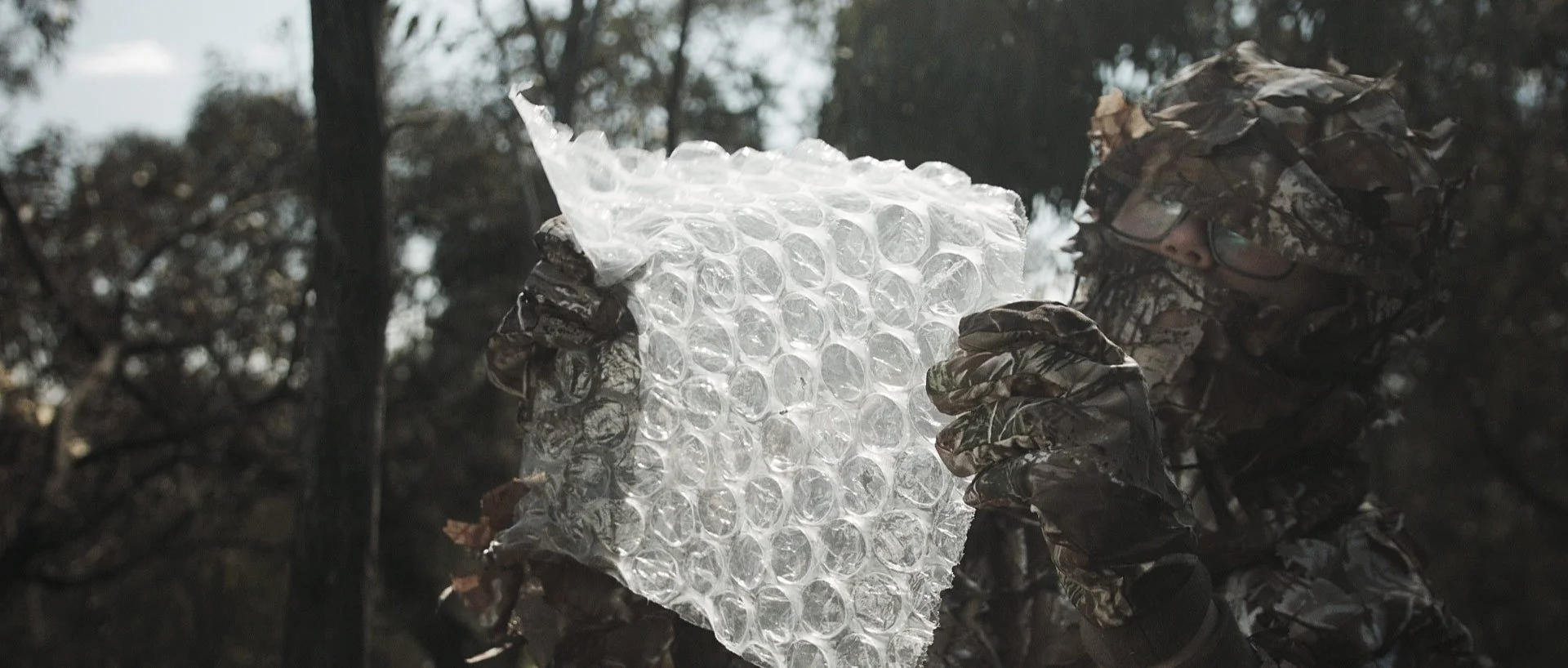
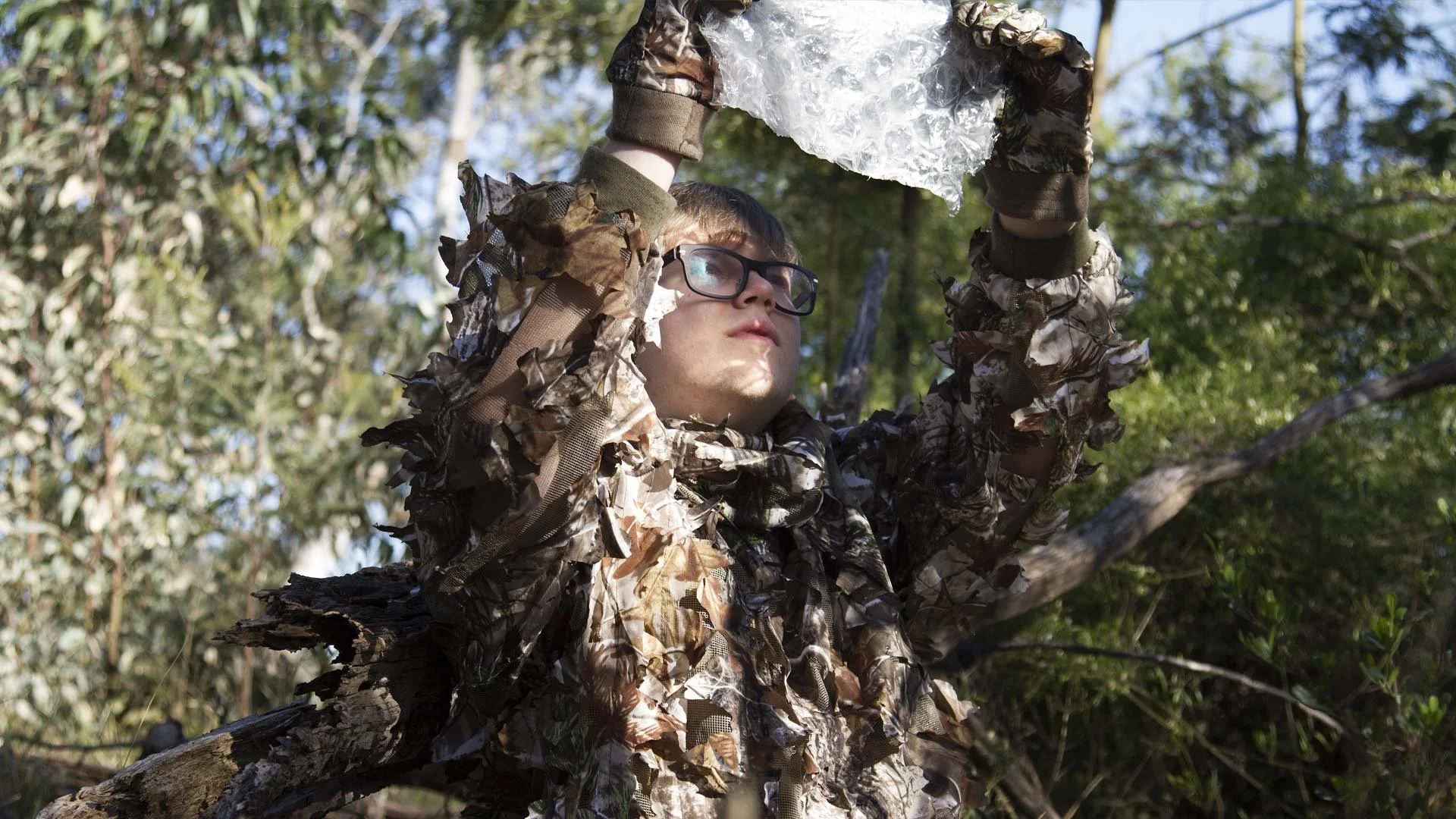
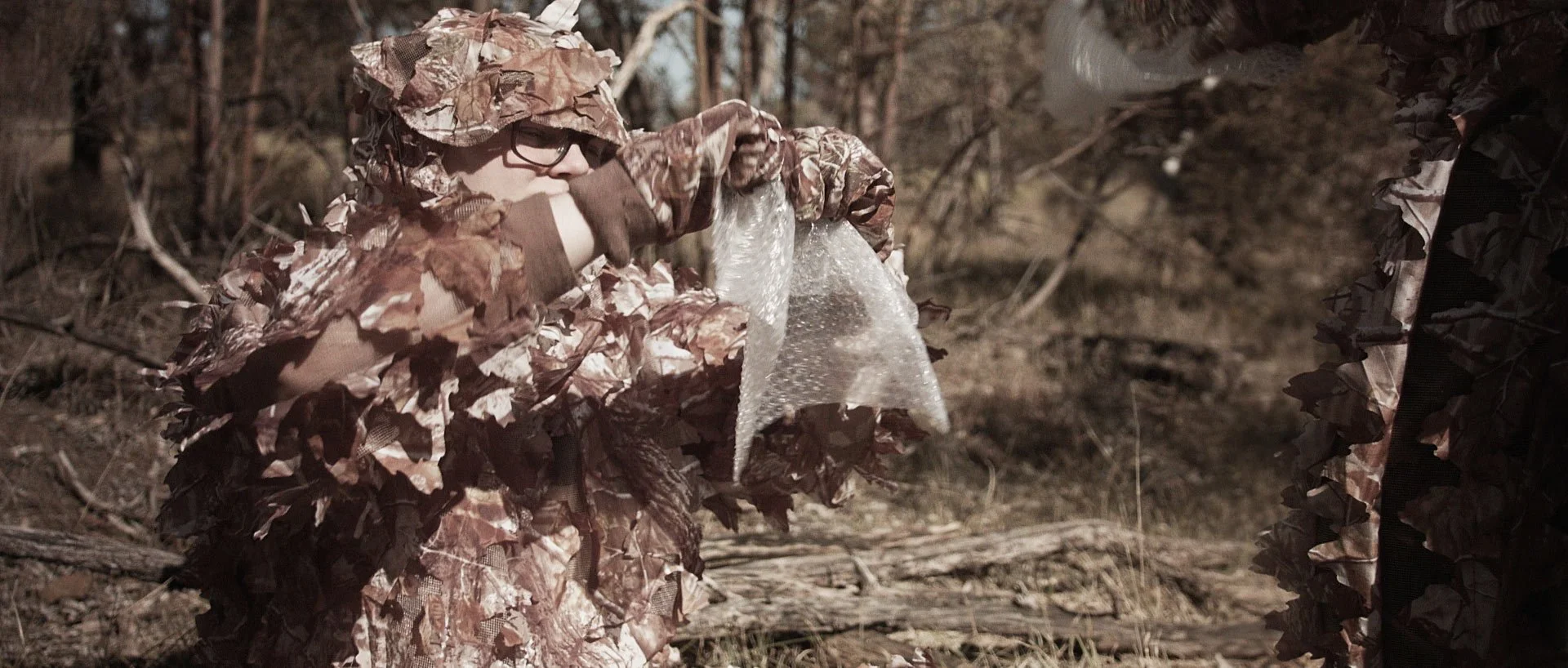
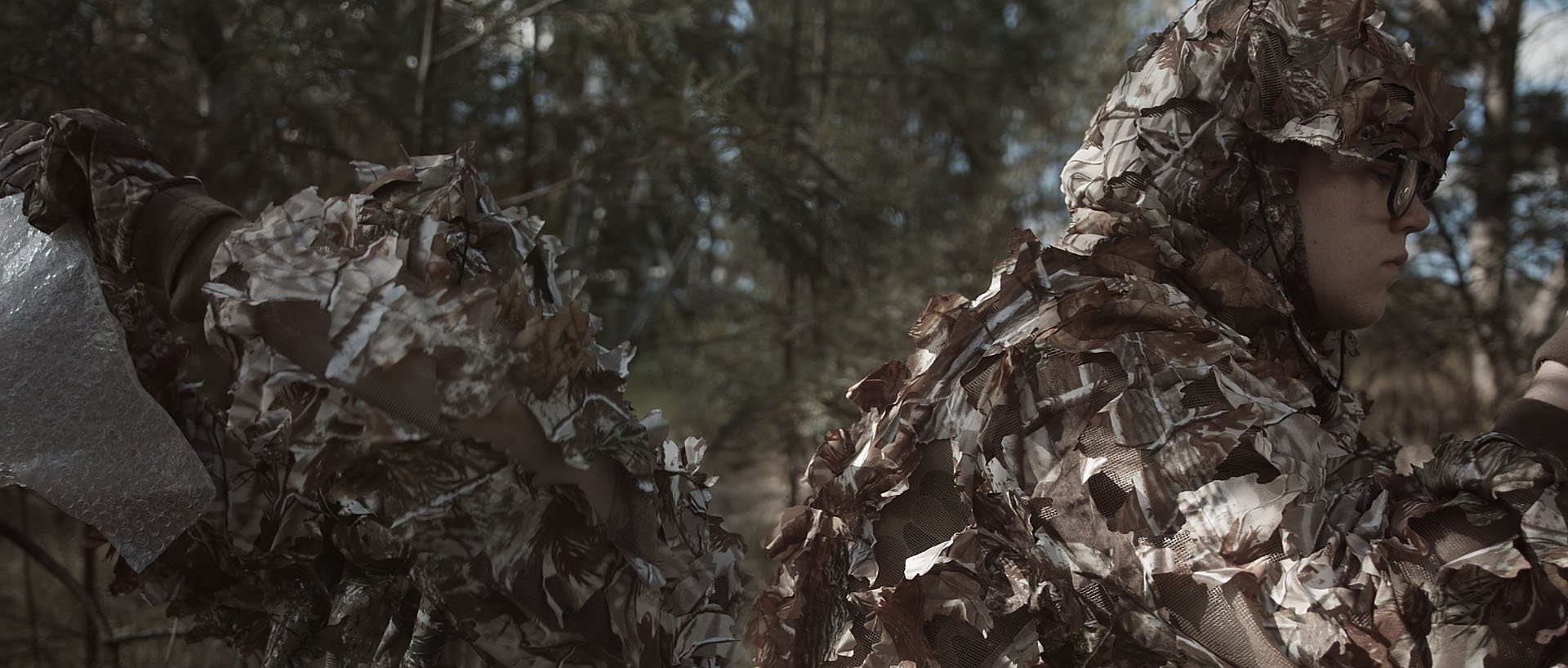
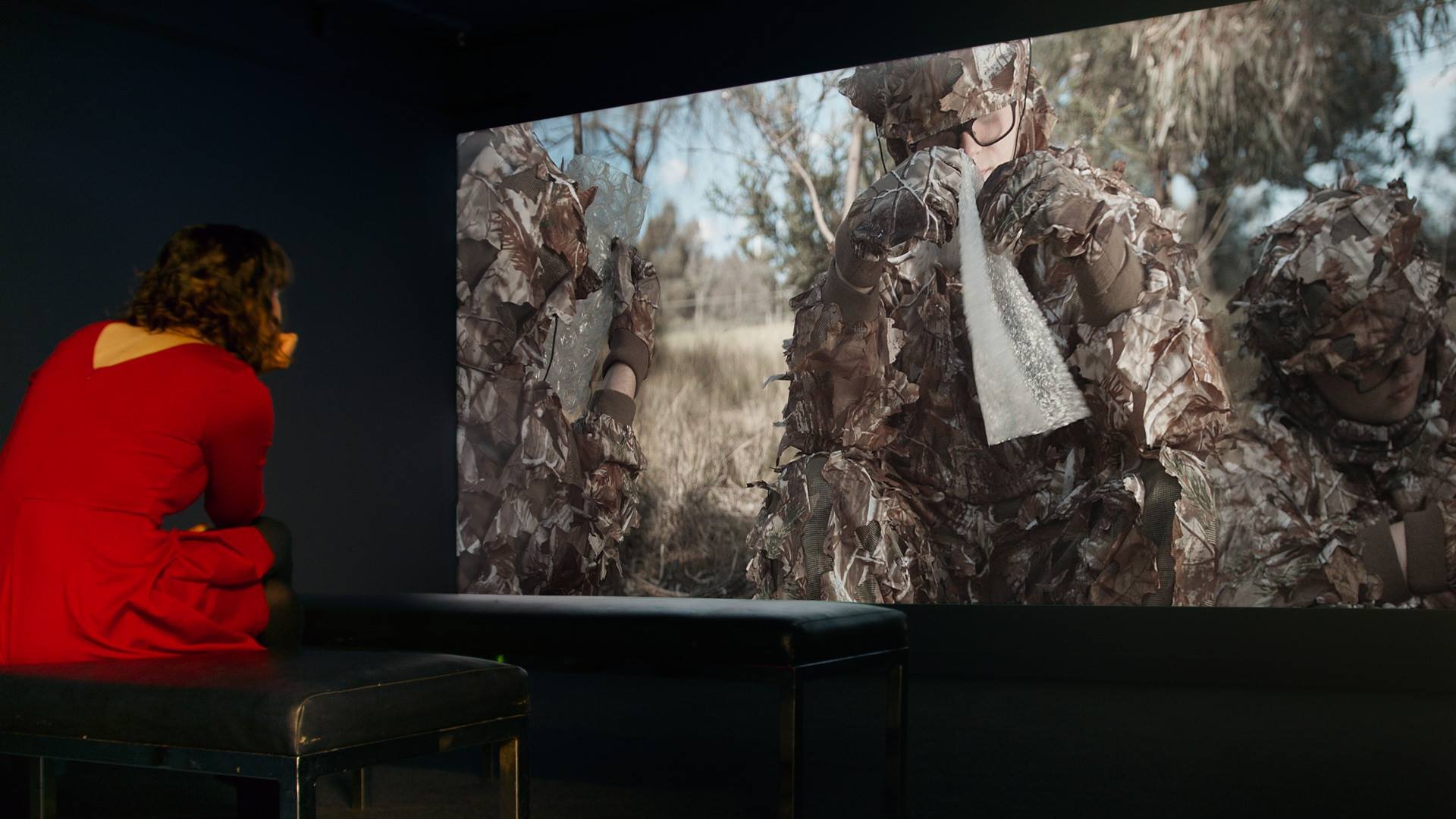
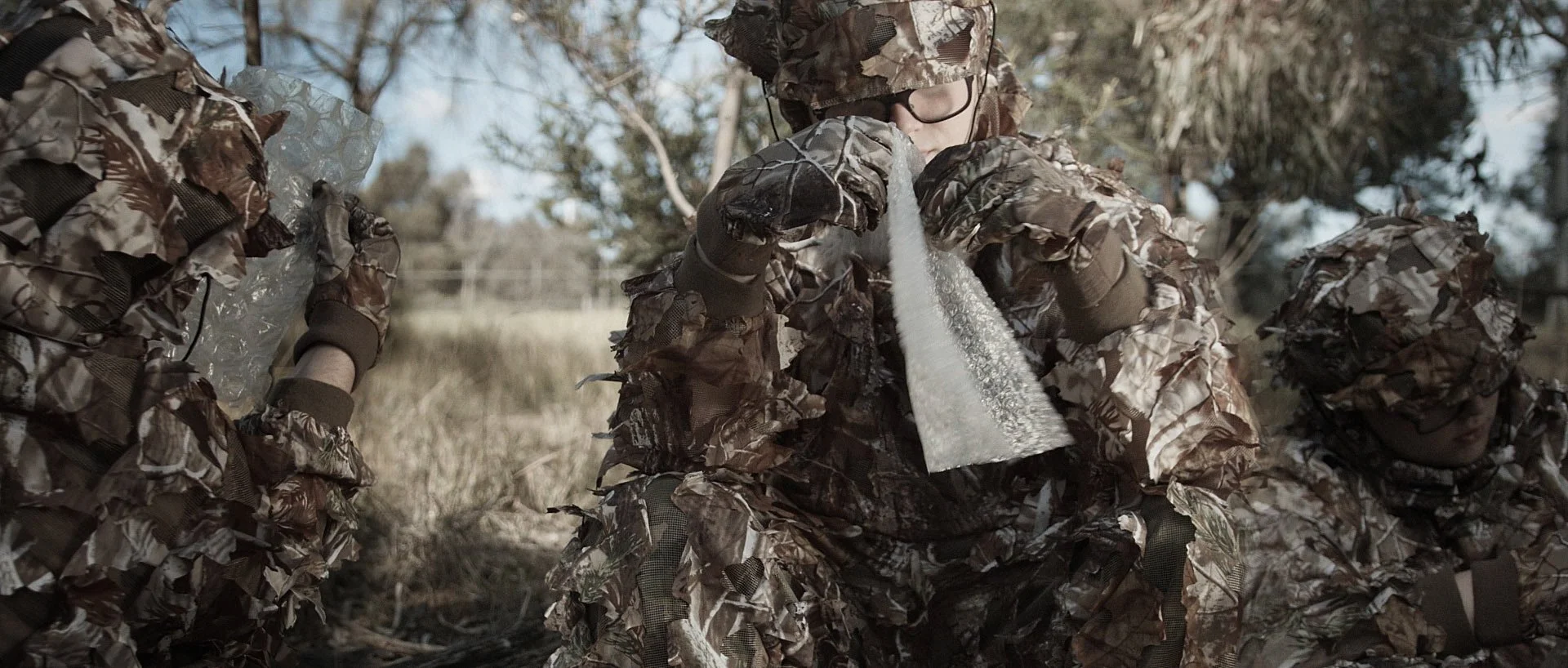
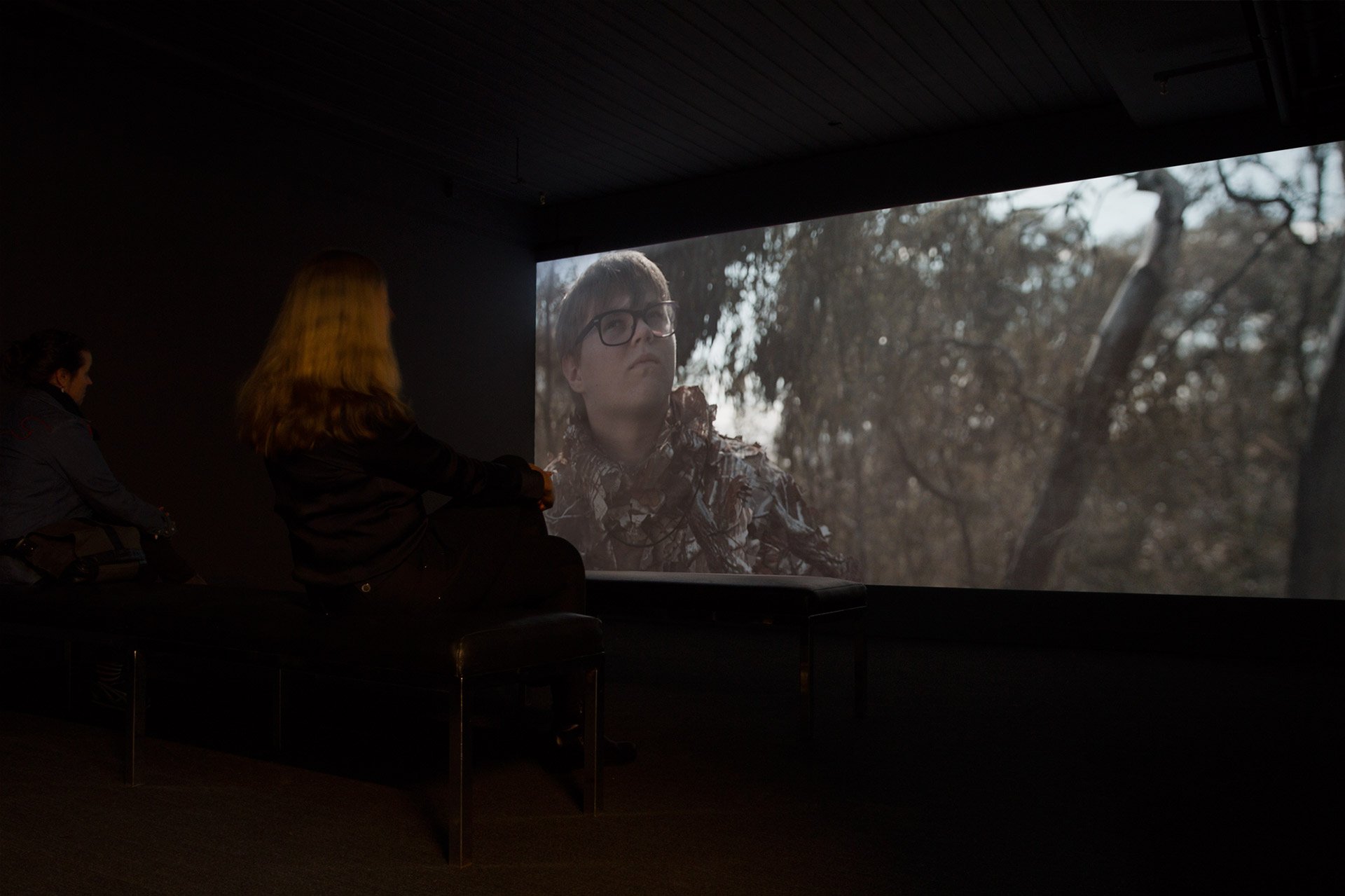
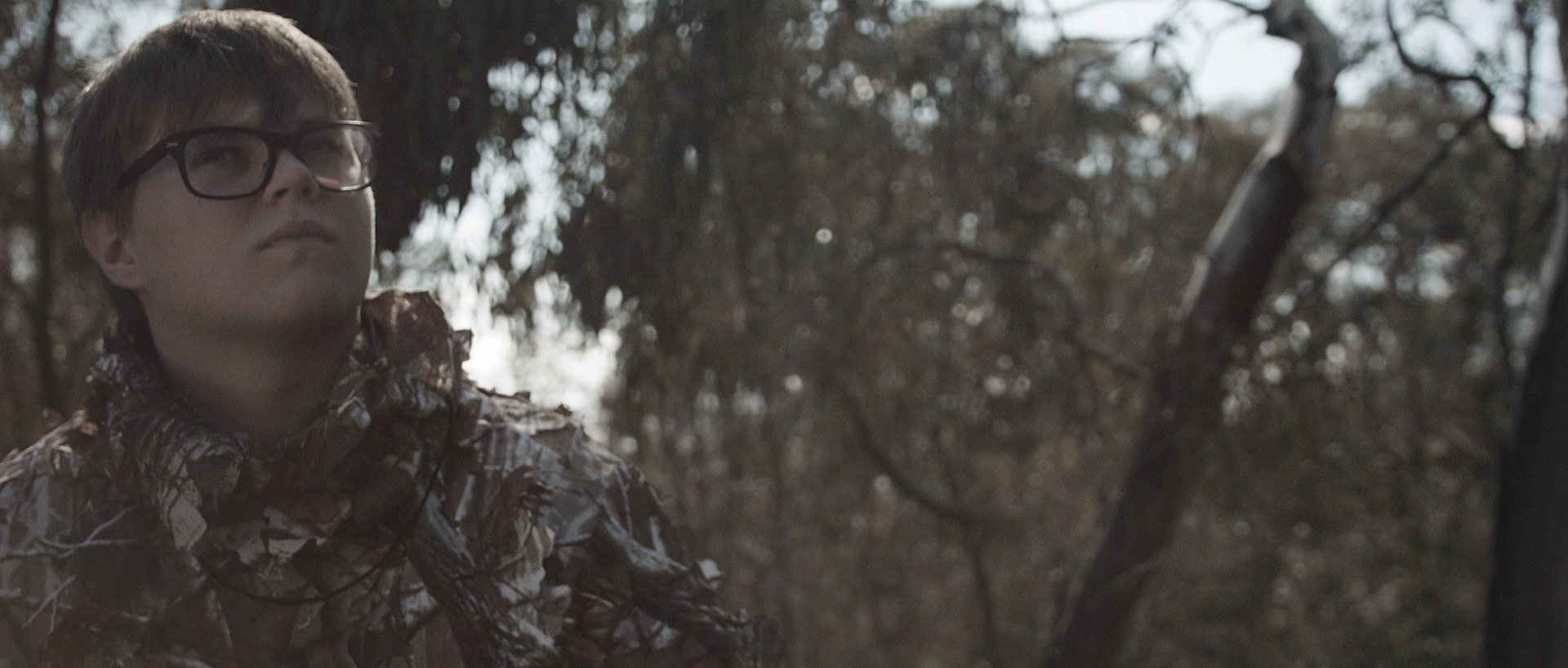
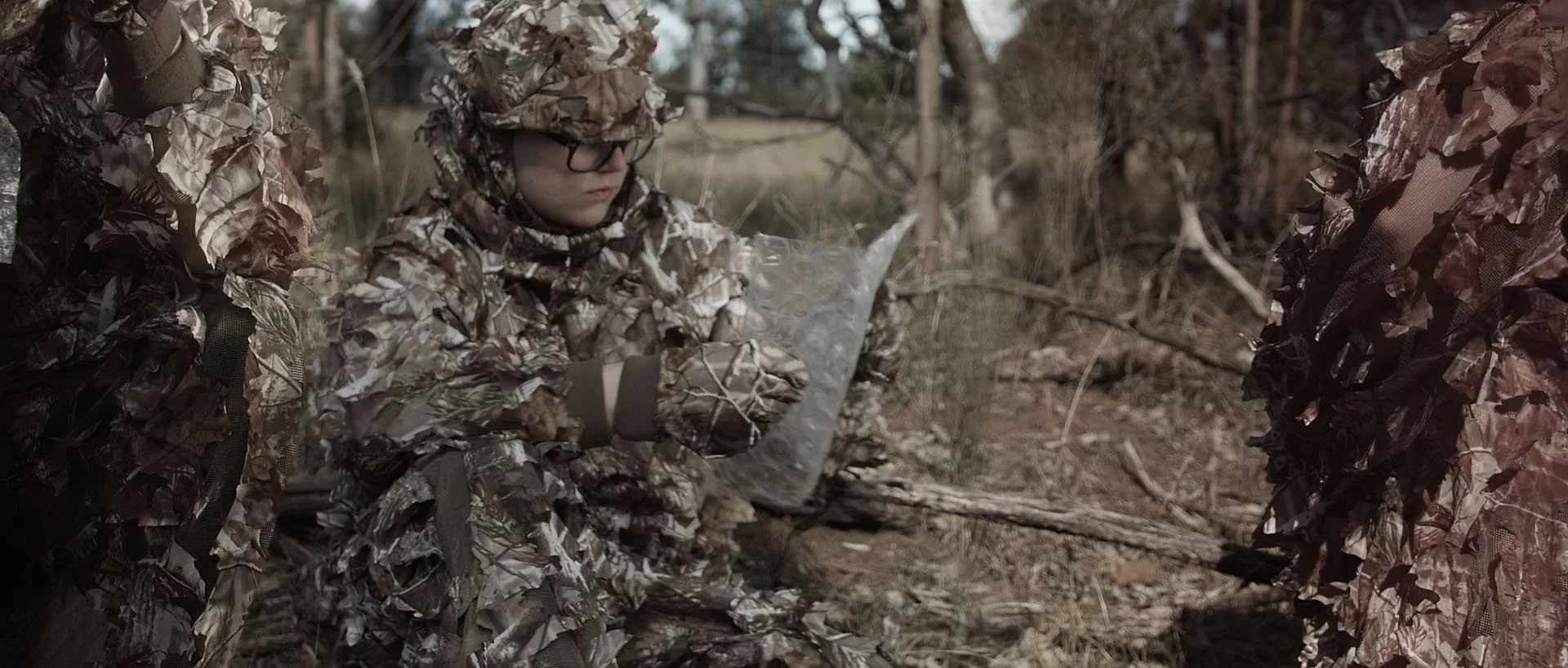
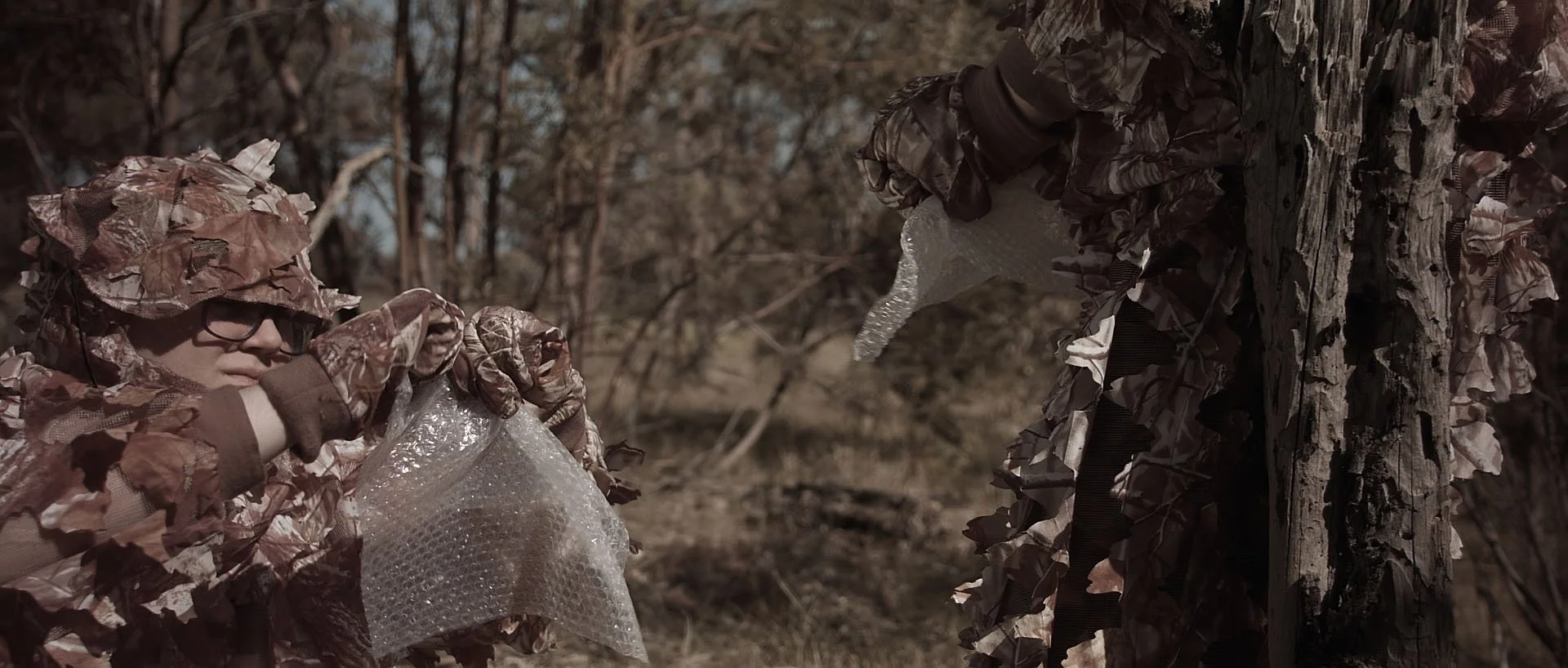
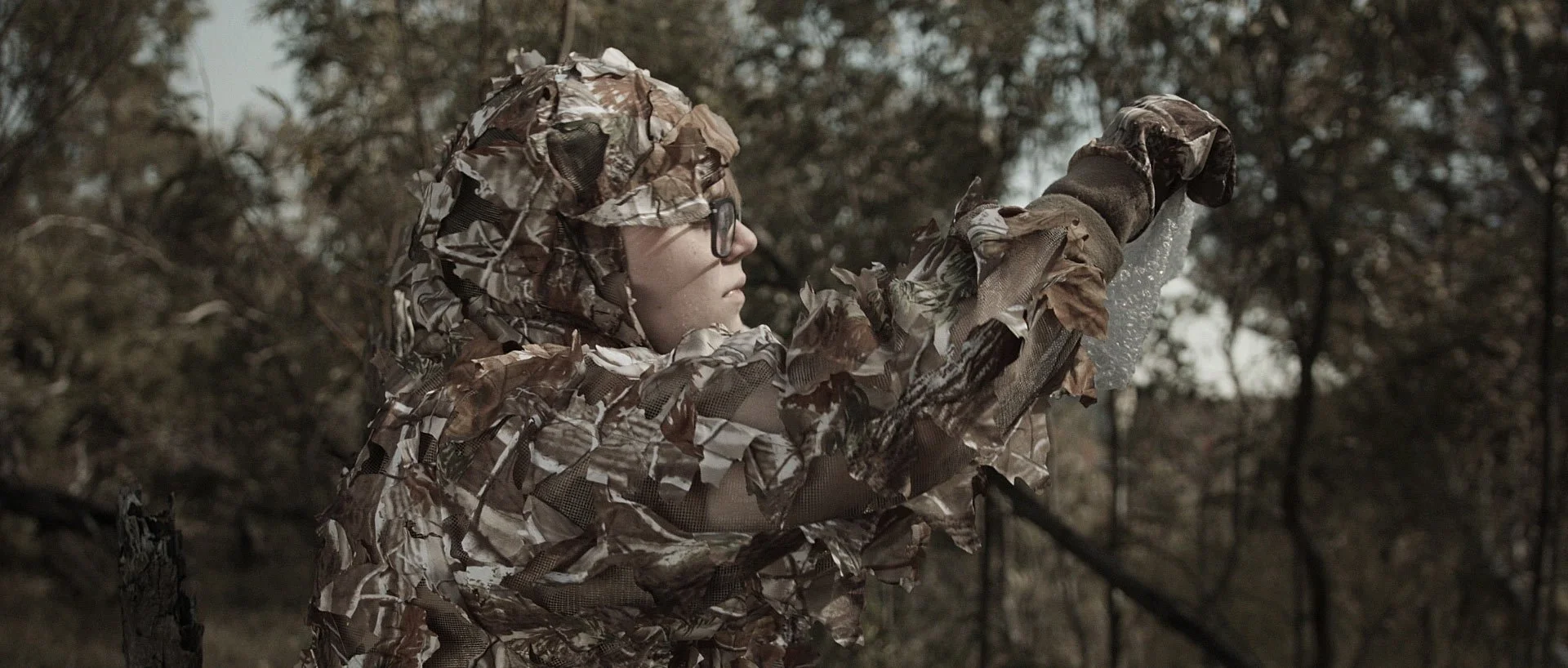
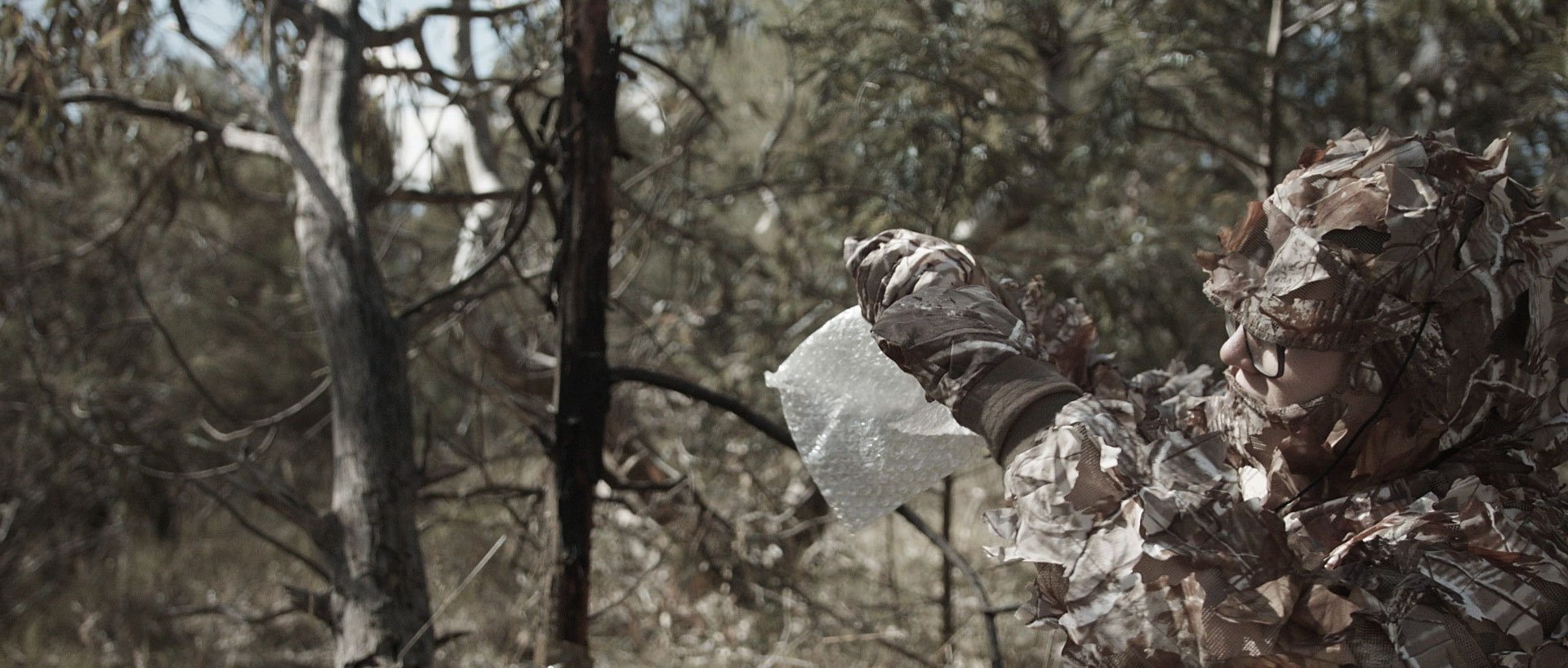
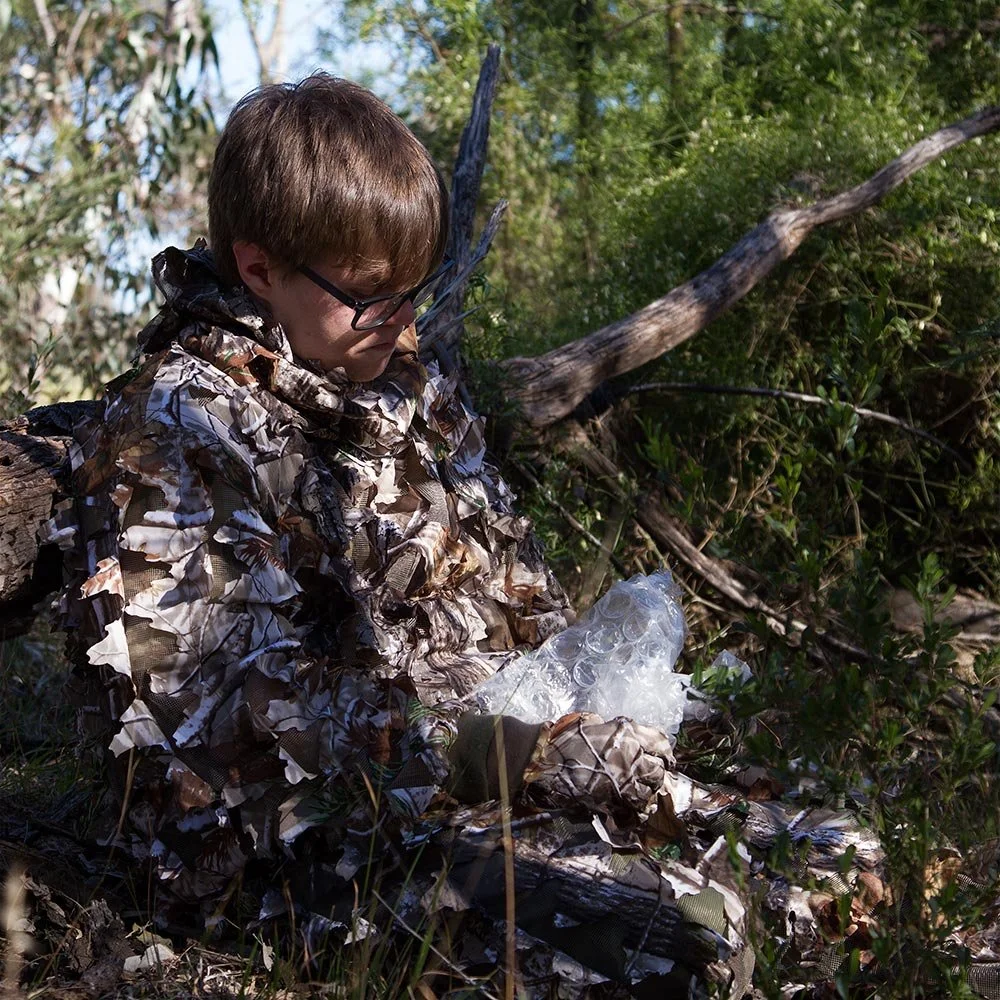
An 'army' of idle underage soldiers pass the time by popping the air trapped within sheets of bubble wrap plastic—a group action aurally reminiscent of machine gunfire. A bombing raid heard in the distance leads each soldier to pause and reflect upon its source. The subsonic explosions are only a simulated echo; an auditory deceleration of the shrill bursts generated through their previous activity with the bubble plastic. As the loop point within the video is hidden, there is no beginning or end to this recurring pattern of behaviour. The constantly rotating 360-degree view references 19th-century cycloramic painting installations such as the French Artist Paul Philippoteaux's depiction of the Battle of Gettysburg—a work seen to anticipate the immersive qualities of IMAX theatre. Camoufleurs investigates the nature of conflict from a number of angles including the establishment of imaginary adversaries as a form of play from early childhood. As camouflage aims to present an image of an uninhabited landscape—an illusion of Terra Nullius—the work also aims to provoke reflection on the purported 'invisibility' of the original figures within the Australian landscape, in parallel with the effects of colonisation.
Video projection | colour | stereo sound | 2.35:1 aspect ratio | 23.98 fps | duration 9'30" (seamless Loop)
Geordie Miller Sound Design
Sam Hillary as the soldier
Essays by Ashley Crawford and Shaun Wilson
Exhibitions & Screenings include
2014 [MARS] Gallery Black Box
2015 Conflicted: Adversaries in Art THG Gallery
2017 Sublime/Internal/Subliminal Limassol Cyprus
Exhibition Essay
by Ashley Crawford
[MARS] Gallery Black Box
2 - 19 Oct 2014
“As long as we could have choppers like taxis it took real exhaustion or depression near shock or a dozen pipes of opium to keep us even apparently quiet, we’d still be running around inside our skins like something was after us, ha ha, La Vida Loca. In the months after I got back the hundreds of helicopters I’d flown in began to draw together until they’d formed a collective meta-chopper, and in my mind it was the sexiest thing going; saver-destroyer, provider-waster, right hand-left hand, nimble, fluent, canny and human; hot steel, grease, jungle-saturated canvas webbing, sweat cooling and warming up again, cassette rock and roll in one ear and door-gun fire in the other, fuel, heat, vitality and death, death itself, hardly an intruder.” – Michael Herr, Dispatches (1977)
Sigmund Freud once noted that the “fateful question” for humanity is whether the instinct for aggression and self-destruction will dominate, noting that: “Men have gained control over the forces of nature to such an extent... [that] they would have no difficulty in exterminating one another to the last man.” Freud hails this as the cause of the general “mood of anxiety,”[1] that assails humanity a similar conclusion to what Hughes dubbed the “age of anxiety.” [2]
This instinct that Freud identified is clearly inbuilt, most especially in the males of the species. From almost the moment they can stand up, boys will find ‘swords’ and ‘guns,’ their imaginations aflame with physical potency and domination. They will find and wear ‘uniforms’ and ‘helmets’ and emulate their anime heroes, thirsting to draw first blood. They will form ‘tribes’ and battle each other into submission.
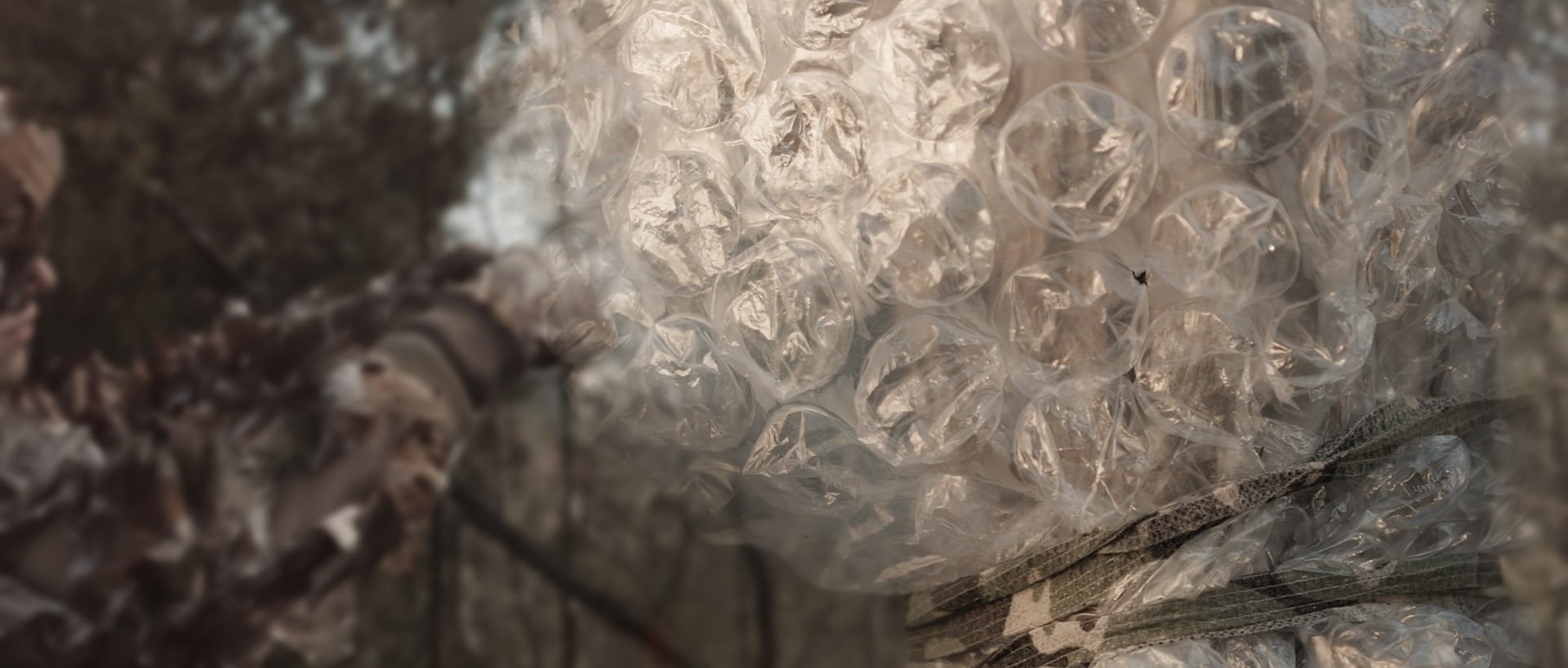
The boys in Camoufleurs (2014) are in fact a tribe of one, the single warrior transformed into a platoon of Anzacs. Their unseen enemy is that of loneliness and isolation, the plague of all pubescent boys. Their weapon of choice is one that most of us have fired, that machine-gun staccato bliss-out of plastic bubble-wrap. The ‘soldiers’ are adept with this murderous tool; one moment it is a keyboard controlling overhead drones, the next an AK47 firing relentless rounds until it ammunition is exhausted as it is squeezed tight.
In the first rotation of Camoufleurs, the accumulated sound of the sharp shrill of popping air is faintly reminiscent of an anti-air artillery flak raid from a World War II film. At the start of the second rotation, our Anzacs pause to listen to sounds of warlike activity overhead. The soundtrack transitions seamlessly into a bombing raid before their attention returns to the sheets of bubble wrap once more. Fantasy is only briefly interrupted by reality. Is there a real battle just over the horizon line? Evidently not as the exploding air bubbles and the bombs are the same. Naturally this encounter leads to a reflection on that most potent of war film soundtracks; Apocalypse Now. Perhaps the whop whop whop of choppers that open Coppola’s film was just a single fan moving through the moist air of a Vietnam hotel room.
In addition to references to the surrealist origins of the disruptive patterns of camouflage such as those executed by English surrealist Roland Penrose, who turned his talents to camouflage design during WWII, are echoes of less heroic figures from war fictions such as Radar O’Reilly from M*A*S*H; a character whose remarkable hearing could even distinguish whether or not the distant choppers carried wounded soldiers or not. Radar is the man-child at war, a naïf who survives through his innocence. The revolving scene also brings to mind a myriad of boys’ own worlds from bygone eras, suggestive of an alternate timeline of desert island activities from William Golding's The Lord of the Flies or the war-time internment of the youth Jim in J.G. Ballard’s Empire of the Sun.
War, they say, is Hell. That is unless, of course, you’re a boy playing safely in the bush in which case, of course, War is Heaven.
[1] Sigmund Freud, Civilization and Its Discontents (Complete Psychological Works of Sigmund Freud), (W. W. Norton & Company; Reprint edition, 2010) p. 92
[2] Robert Hughes, American Visions: The Epic History of Art in America (Knopf, 2000) p. 543
Sublime/ Internal/ Subliminal (2017)
ArtNeMe Arts Centre
Limassol, Cyprus
Shaun Wilson [Essay Excerpt]
Sublime/Internal/Subliminal brings together a cross selection of emerging and established artists who reflect this constant. Throughout the last five years, for example, global events have brought a unified social disruption - from Brexit and the war in Syria to the US election, mass refugee crisis and climate change, just to name a few - yet many artists have reflected these disruptions in more overt political commentary in as much as they have, at the same time, travelled inwards to reflect on their own poetics and subliminal grasp of the world around them.
One of the more interesting notions about this internal approach is that the idea of political resistance is emerging as a non-political methodology for artists whereby their work is, as located in Boland’s Camoufleurs video for example, interconnected with the absence of a pronounced quietness. In Boland’s piece, the effacement of stillness is transcended to represent an eerie absence not unlike the Hitchcock principle of representing screen tension with the effacements of something that is just about to happen or has just occurred.
We know that by these tableaus of adolescent boys role playing soldiers that one day, perhaps, sooner than later, their fantasy of playing soldier might translate into the actuality of war where the heroicness of battle is replaced by unspeakable trauma, genocide and murder. With the recent images of the wars in Syria, Afghanistan and Iraq, the reality of combat transmitted from the technological immediacy from social media reminds us all too closely that the age old entrapment from governments and kingdoms to encourage the predatory romanticist propaganda of militaria to an unsuspecting youth is alive and well and in the case of Camoufleurs, Boland positions this Hitchcock precursory with great skill in as much as the viewer brings with them their own cultural memory attachés. One of the more interesting notions about this internal approach is that the idea of Perhaps the greatest strength of this work is to unite our own awareness of battle through the innocence of these fictionalised boys playing men in the intentional manipulation of truth. I am, of course, reminded by Baudrillard's notion of simulacra whereby he considers that ‘illusion is no longer possible, because the real is no longer possible’ (Baudrillard, pp.164-184) for in itself, and, moreover, the intangibility of not only Baudrillard's comments but also the dialogue brought about by the strategies employed from Boland’s conviction posits the stillness of Camoufleurs into a space that requires no explicit explanation into the overarching meaning of the work. From its pending silence, the implicit effectiveness that renders such work as political is as much to do with the visual linkages Boland enacts as it is with the simplicity of how such linkages are mediated. This brings into question the great vulnerability of the portrayed characters romanticising the glory of battle without the conscious determinism to recognise how these actions of false heroics negate the transcendence of morality to what the popular early 1930’s anti war movement slogan often attributed to Bertrand Russell states ‘war does not determine who is right - only who is left.’ (Montreal Star, p.1)