Homework
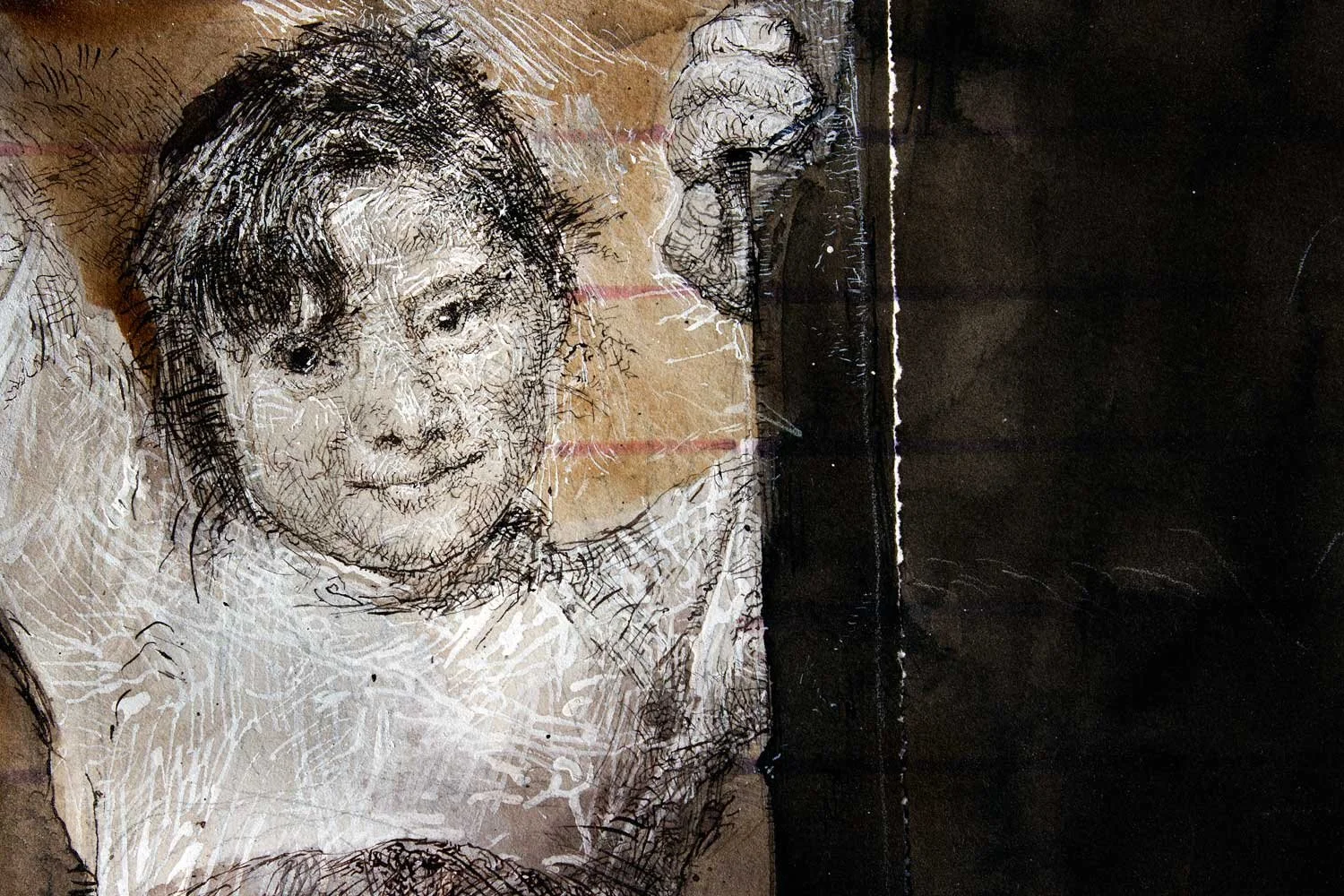
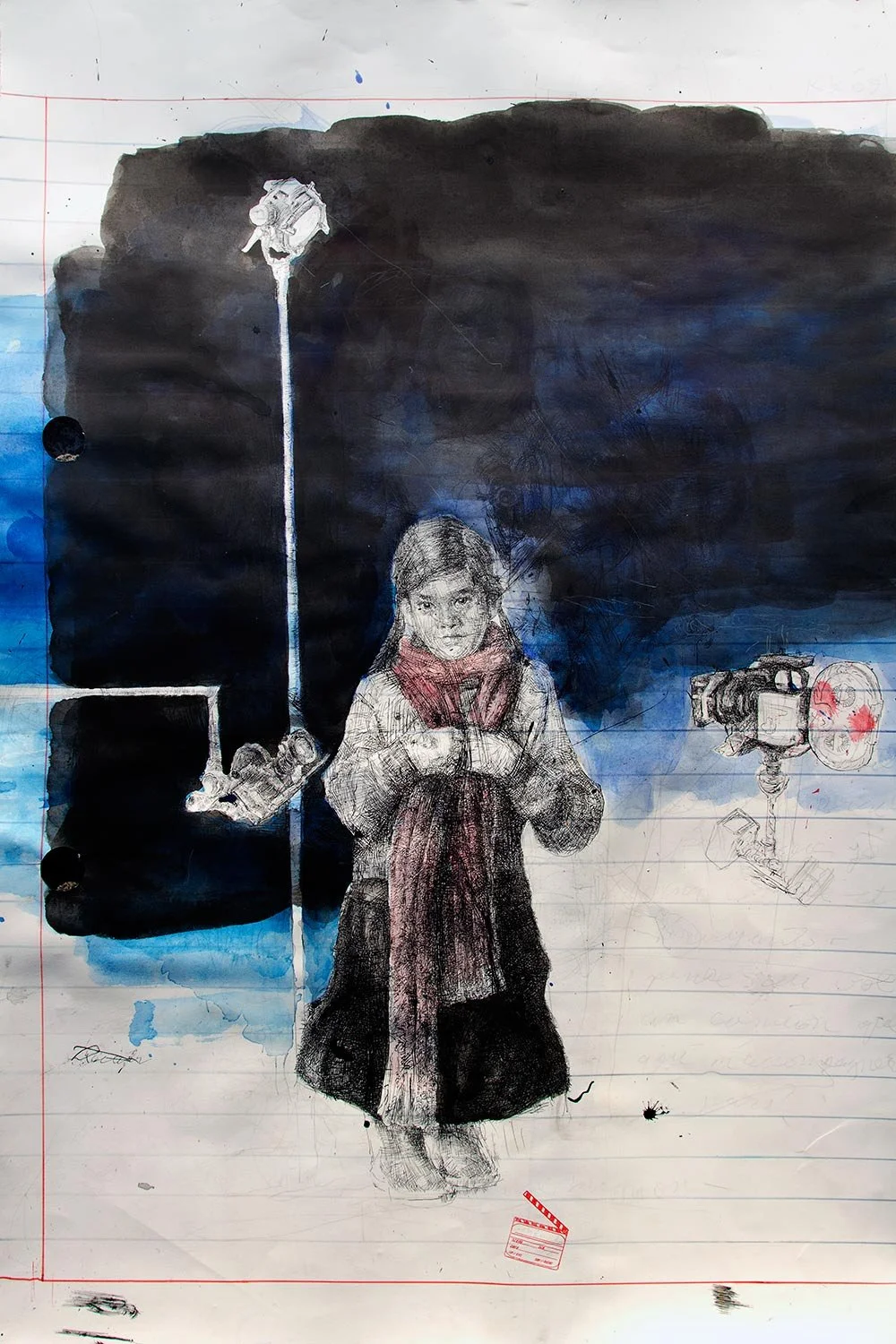
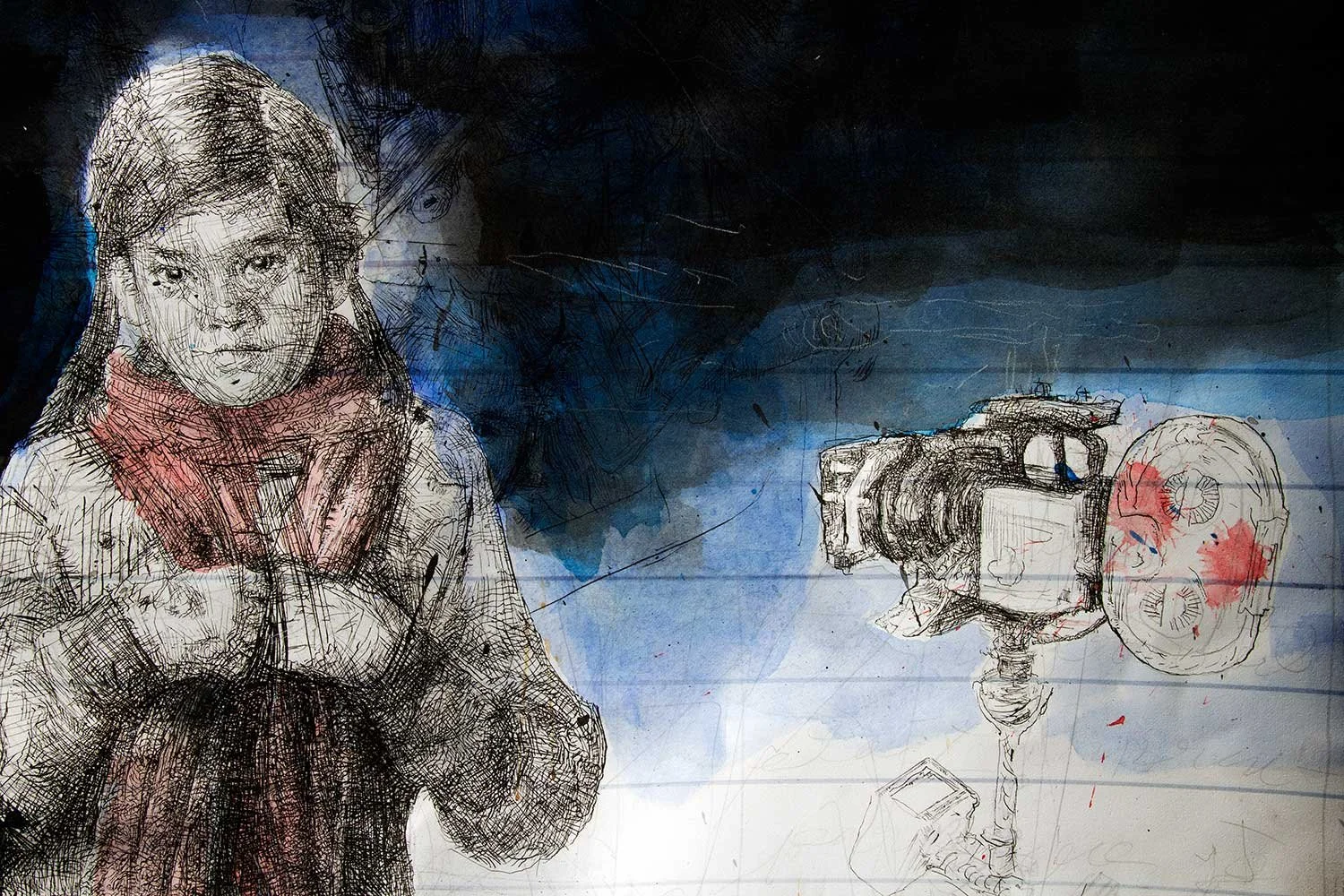
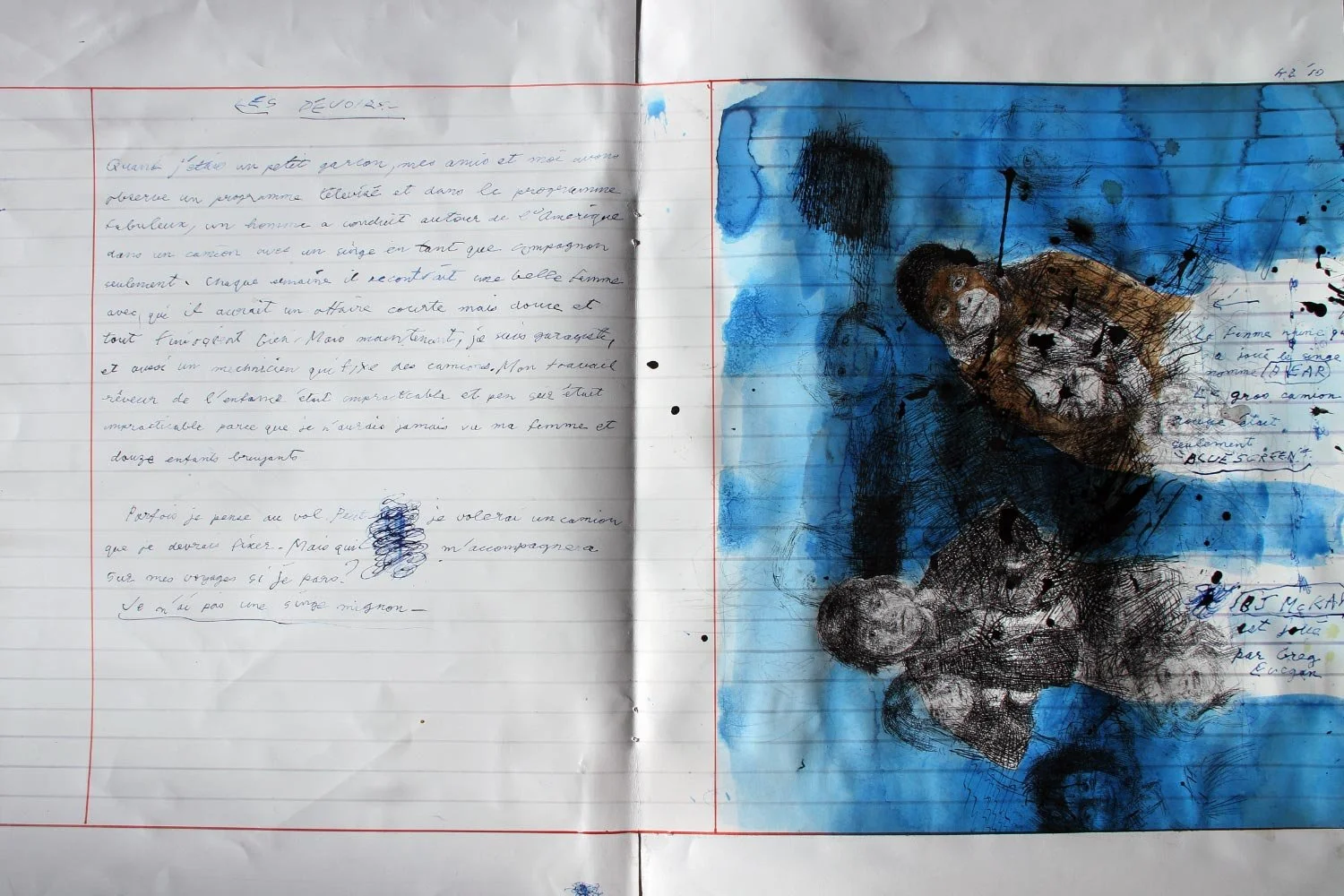
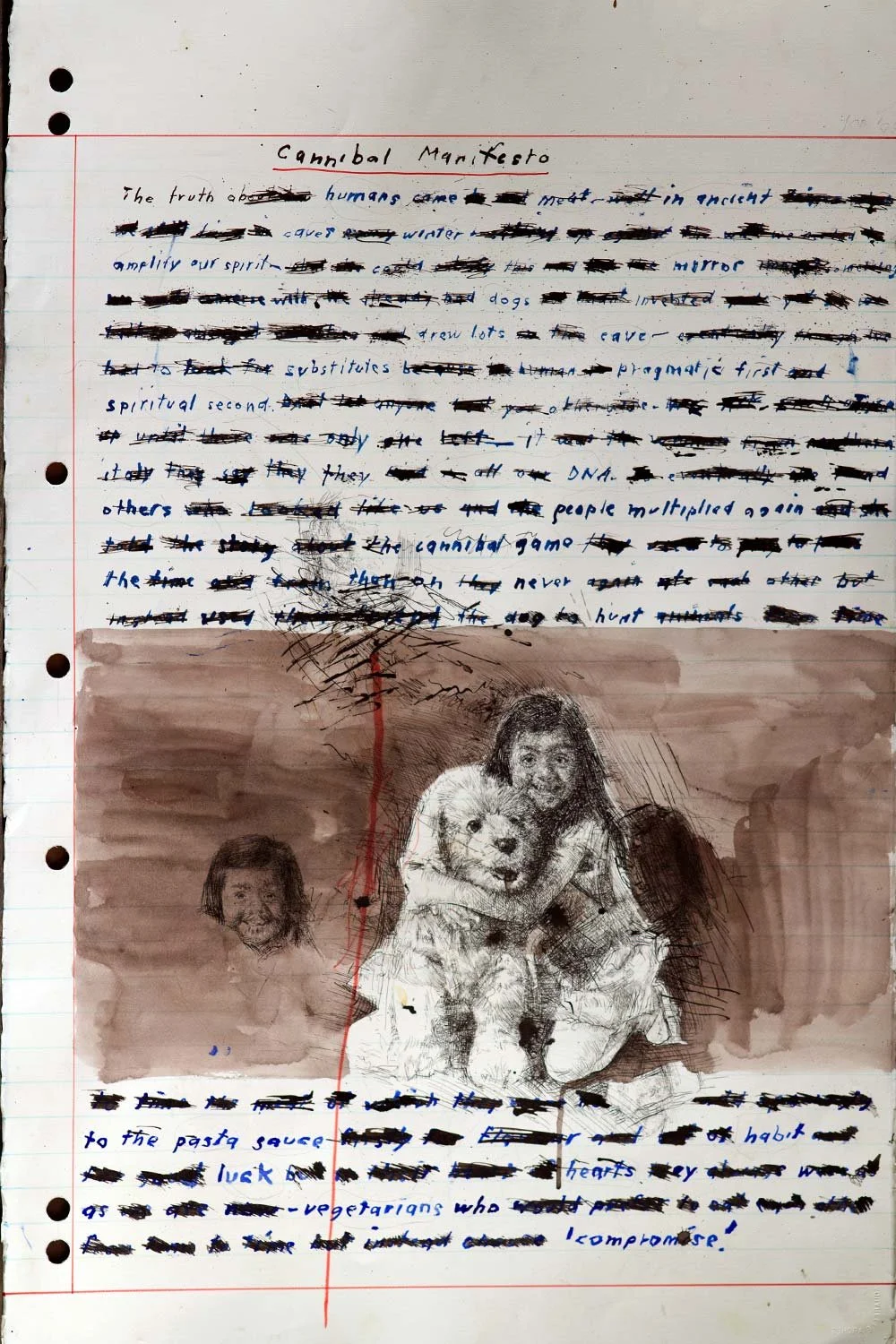
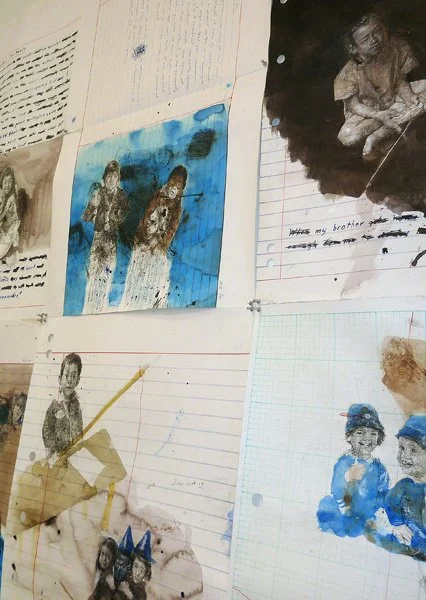
2009-2010 | Drawing Series: Pencil, Indian ink, Copic Ink, Gouache on paper | Each 100 x 66cm
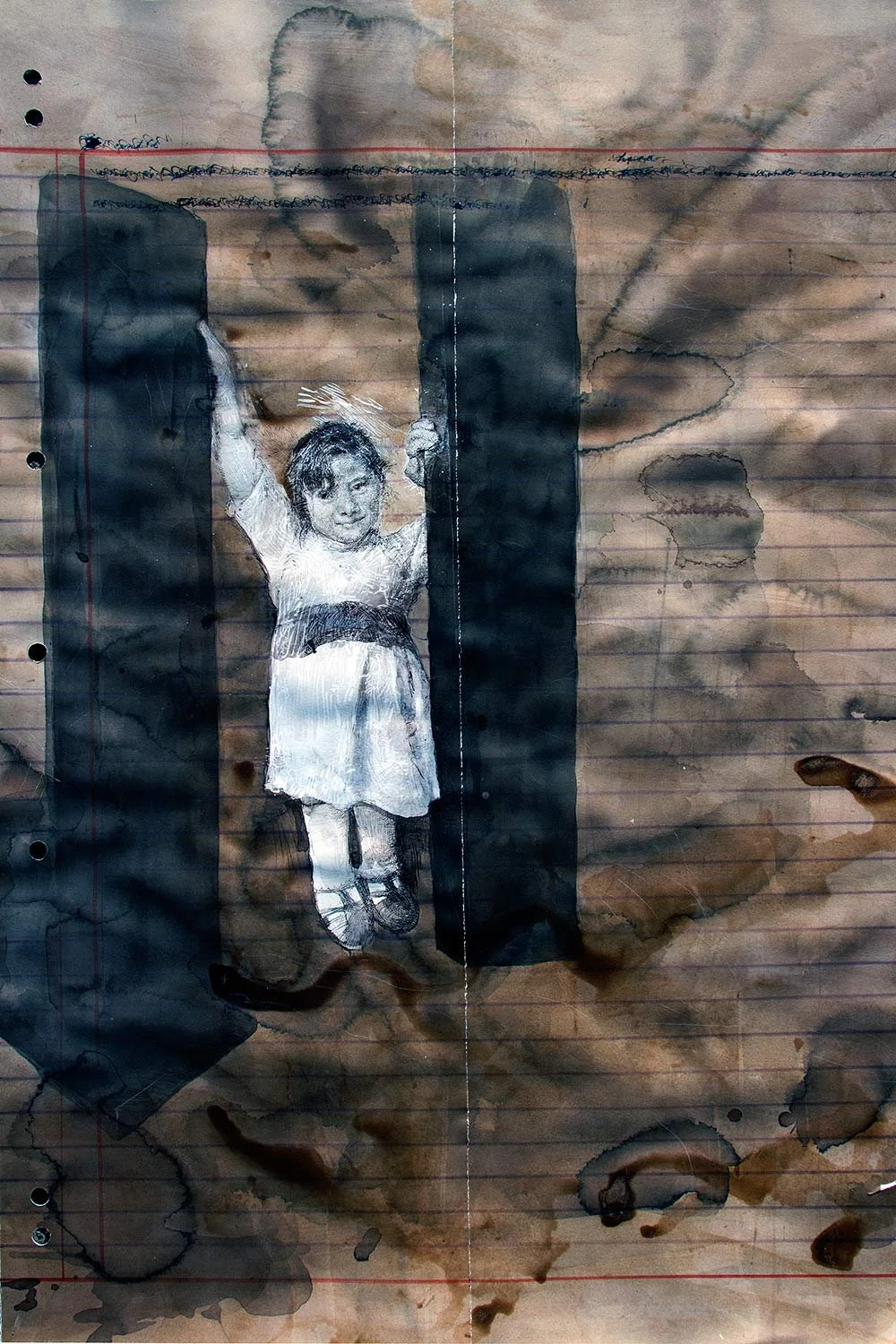
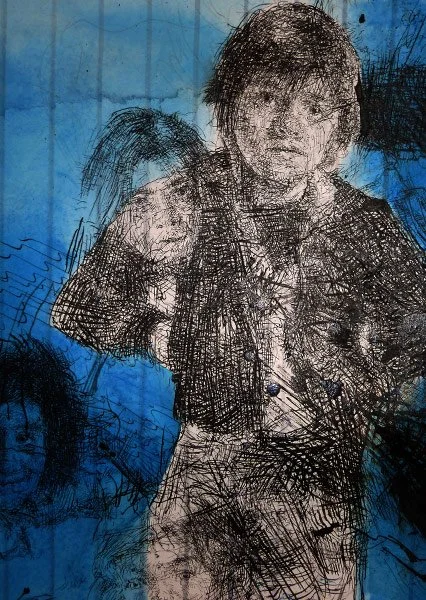
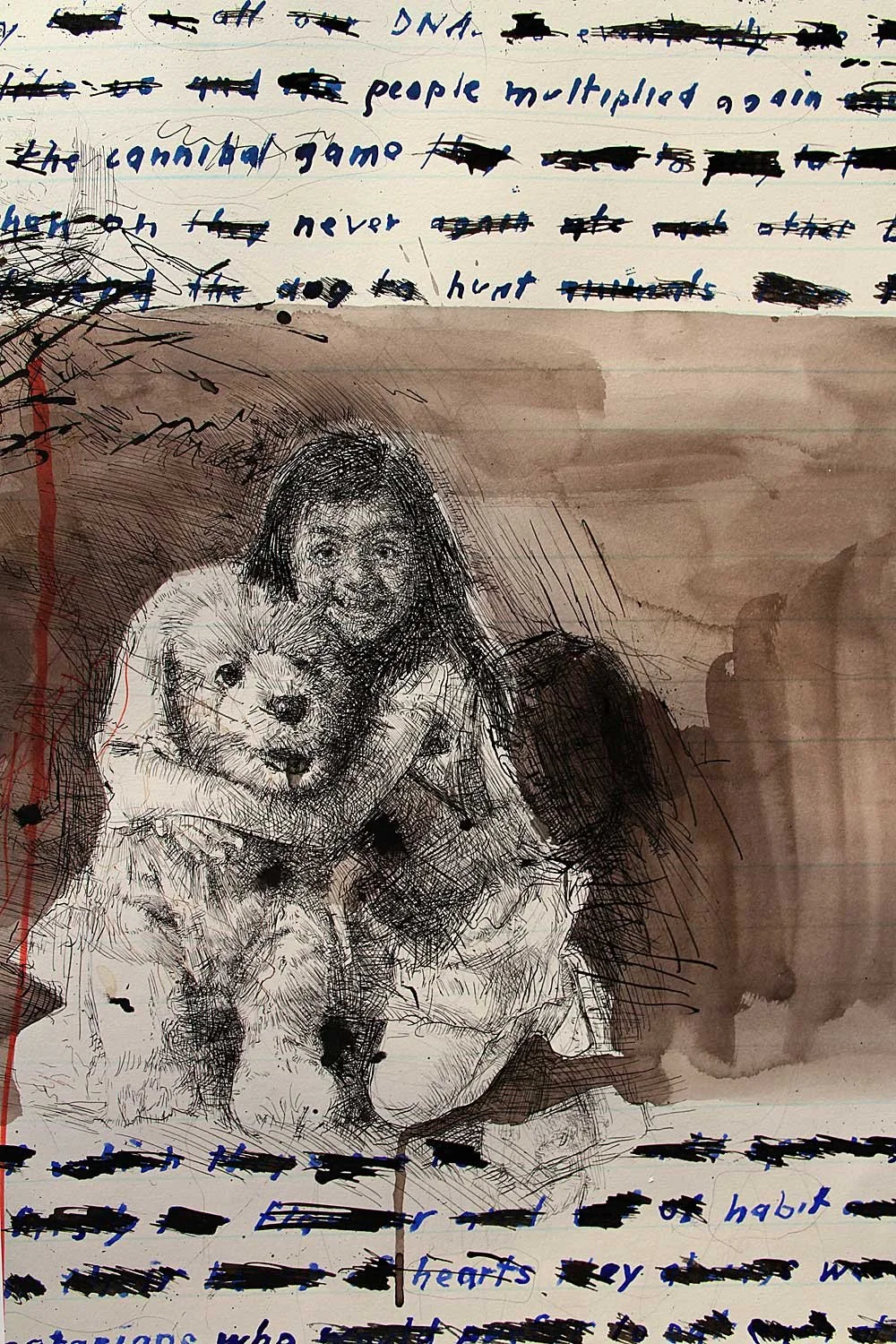
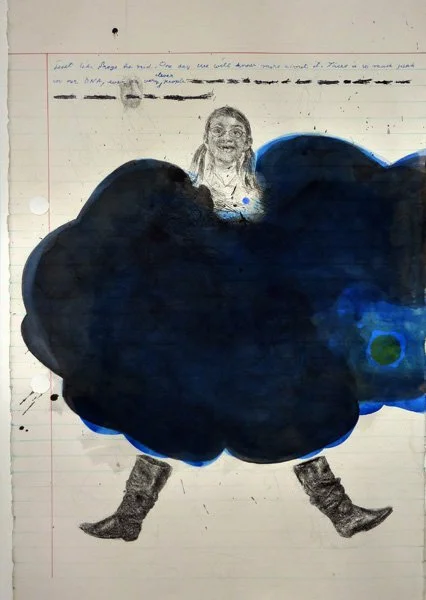
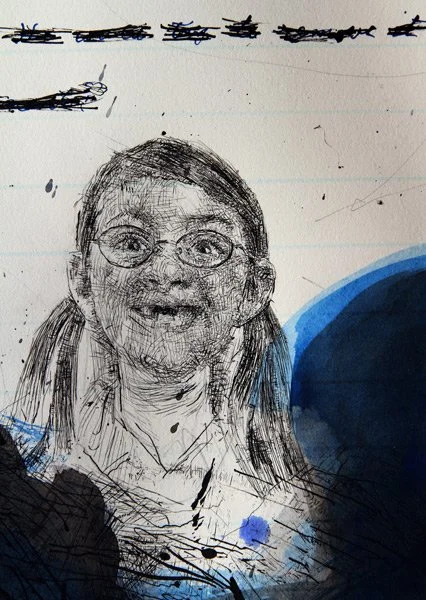
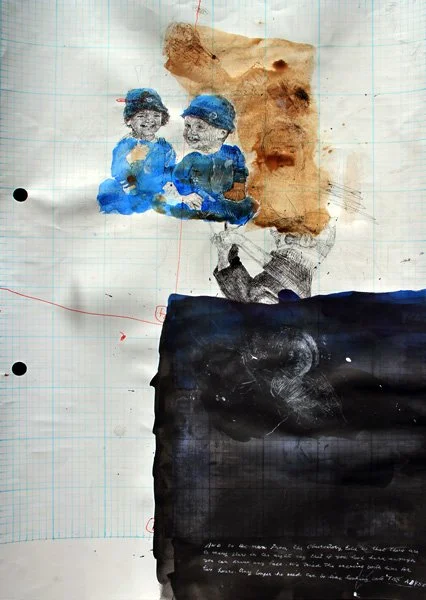
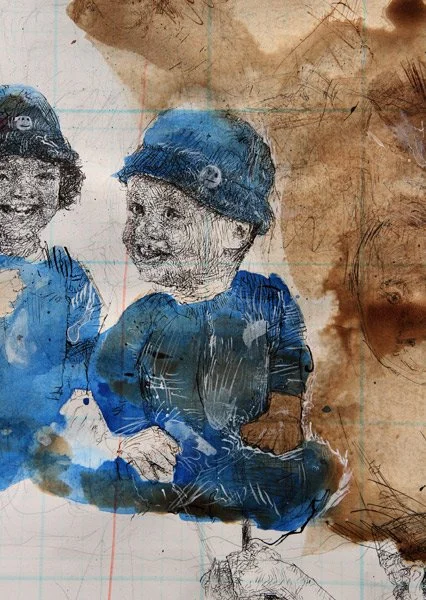
A little girl stands between two oversized audio speakers, its levels could be marked by the horizontal lines of the page they appear on. Another boy with dynamite and a trip wire suggests a potential battle zone for the future of learning after a 'field trip' to visit the grand old lady of minimalist painting, Agnes Martin. Maybe it's mischievous to think of her work as a clean slate but for many generations, progress at school was invariably measured through the parallel line or grid template of an exercise book. The journey towards knowledge requires the "destruction" of any resemblance it may have had to minimalism—as a readymade object unworthy of a child's attention. These oversized "homework" drawings may bring to mind the recurrent nightmare of finding oneself back at school, or even suggest their author/artist was a moronic overgrown child confined to a 'special' school. Alternatively, the viewer may legitimately question whether such dramatic changes in scale (as a widespread artistic strategy) are an essentially infantile, attention-seeking device.
— Project Notes (2010)
First shown in the group exhibition Like No Place Known for the inaugural International DRAWING OUT Festival at RMIT University School of Art Gallery 7.4.10 - 16.4.10
Curated by Katarina Frank and Peter Westwood
Artists
Kieran Boland (Australia)
Cecilia Darle (Sweden)
Gunilla Hansson (Sweden)
Patrick Nilsson (Sweden)
Jin Shan (China)
Andreas Soma (Sweden /Norway)
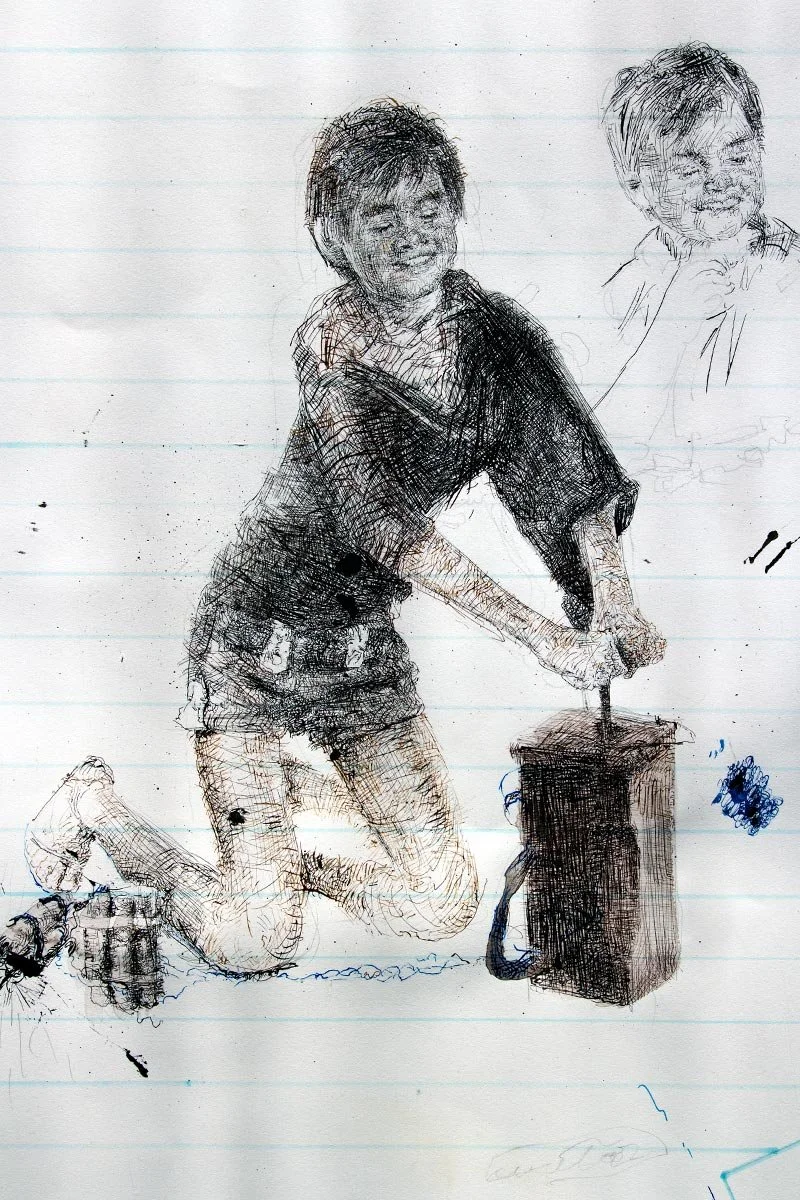
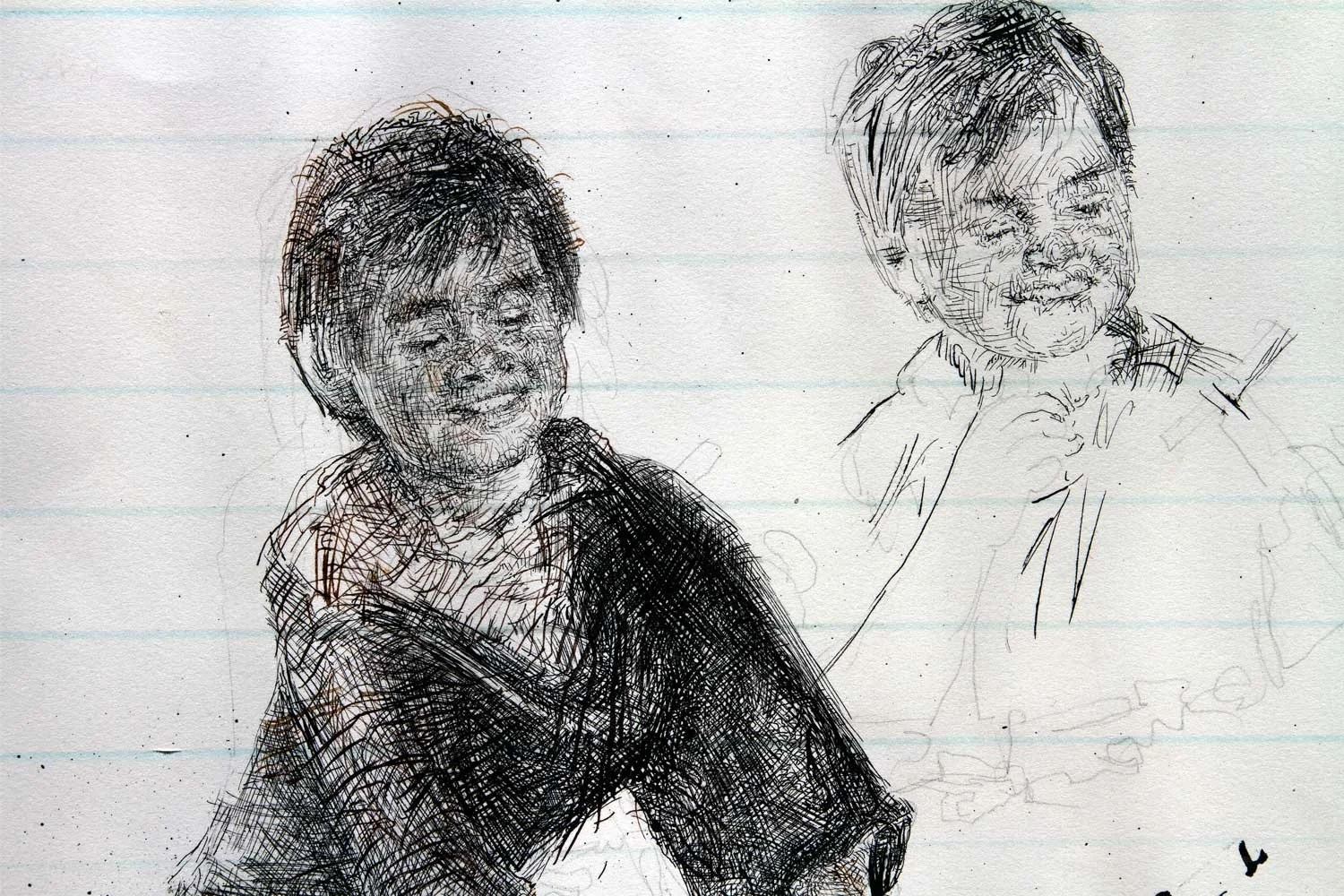
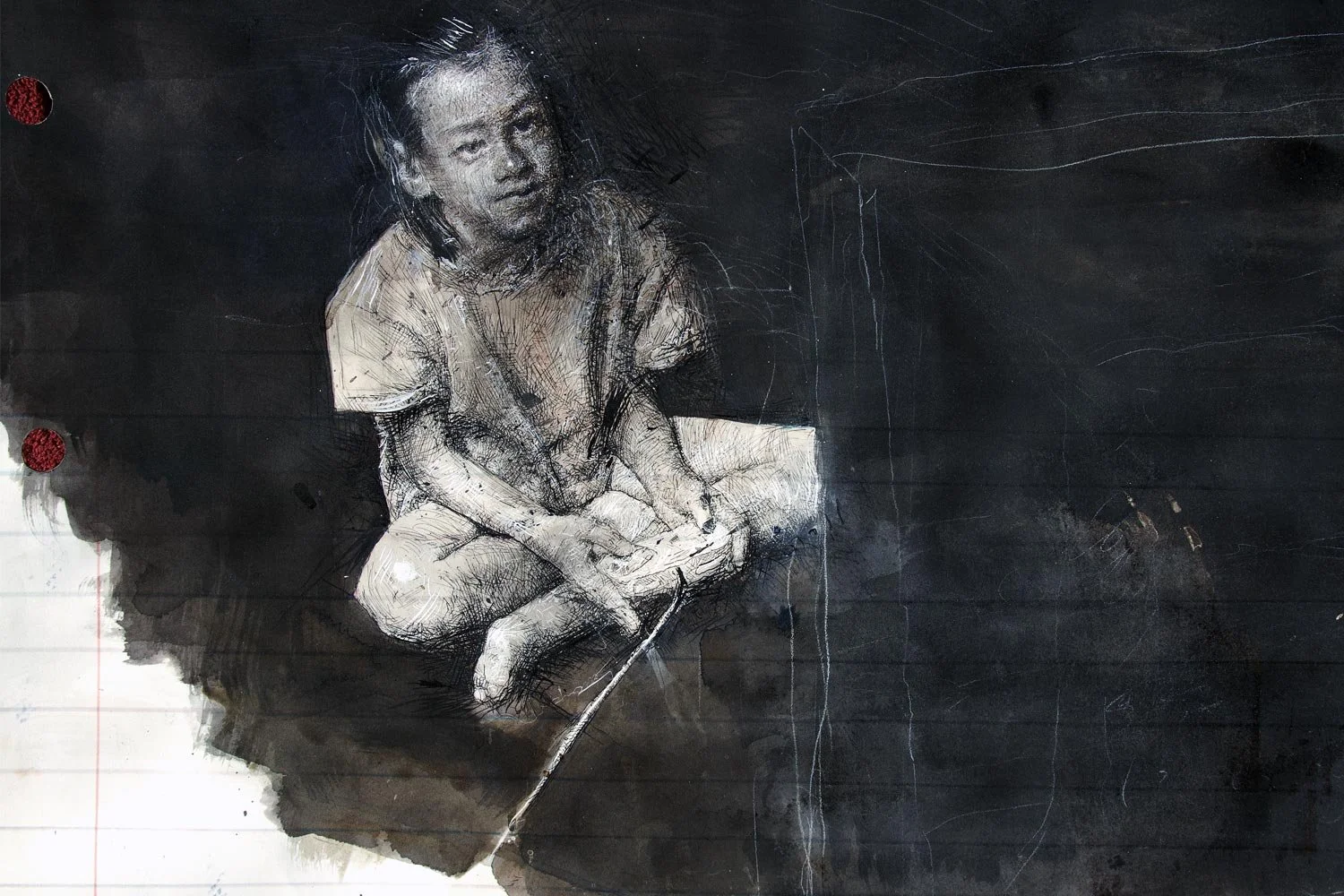
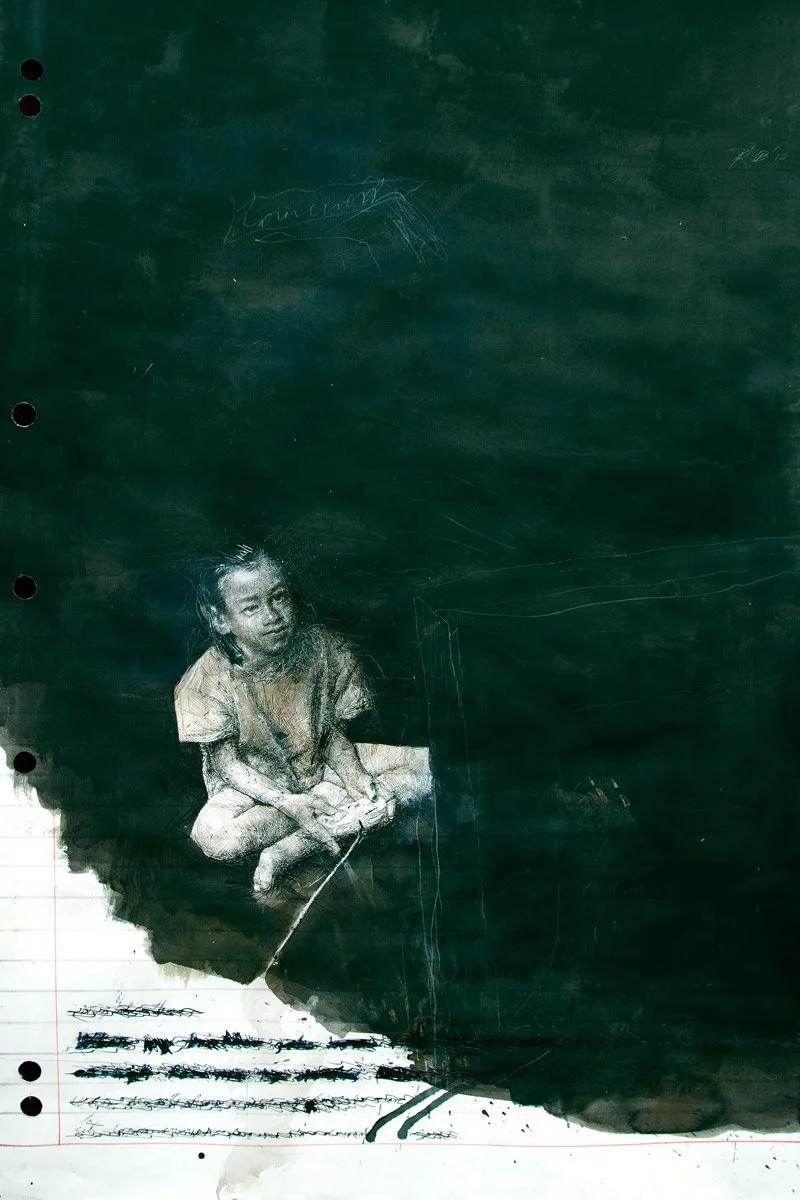
Like No Place Known (2010)
Katarina Frank and Peter Westwood | Catalogue Essay Excerpt
Drawing versus writing
Next to spoken language, drawing and writing are primary human impulses of communication with the origins of writing in drawing, and drawing in writing, each capable of invoking direct or circuitous meaning. However drawing and writing also conjure a sense of opposition located in childhood as we learn to write between lines and to read between lines.
Through drawing Andreas Soma and Kieran Boland dissolve and question the distinct roles and characteristics of drawing and writing. Both artists work within a 'literary aesthetic' that helps with accessibility, making drawings that have a notational appearance that imply free association. Soma's word drawing Description (Not stupid, Careful, All right, Good friend, Headstrong, Good, Unfair, Very good, Good ideas) employs words that seem to convey meaning through the use of descriptive lists. However the words remain incongruous and evade meaning. Soma's list fails to deliver, silting at the perimeters of semantic meaning, the content residing in the drawing itself, a nervous and jittery, yet purposeful avowal. The failure of Soma's words to convey semantic content implies an anxious and humorous apprehension about our inability to communicate.
His selection of a seemingly archaic font, pixilated and finished in smudged ballpoint pen shifts, as do Boland's drawings, between being proclamation and a displaced or unassuming note. Drawing and writing are intimate activities although both distinctively influence the public domain. Through fictional simulation Boland exacts a series of enlarged notebook pages that suggest school workbooks in a style echoing illustrated narrative. His drawings invoke past and confusing times, a world of children, television and fragmentary notations, a time of trying to grasp what type of place the world might be.
Can any of us locate the moment in our childhood when text replaces image as our primary means of understanding the world?
Boland suggests a type of encounter between drawing and writing, where scrappy and puzzling notes clash with refined iIIustrational drawing in an attempt to reassess the hierarchies surrounding drawing and writing, and the role of personal or individual expression. Oddly magnified in scale to decrease our sense of intimacy and to position his drawings in a more public domain, Boland's notebook pages heighten and expose an antagonistic struggle between text and image, addressing the childhood shift away from drawing towards writing. Yet with hindsight and aware of our common primary impulses, we believe in drawing in much the same way as we believe in writing and spoken language. Boland identifies a place of doubt and confusion, a moment in our lives, through his depiction of an illustrated world, where children grapple to find clear meaning and are challenged by perplexing and absurd convictions . Vegetarians who compromise are people who lose faith.